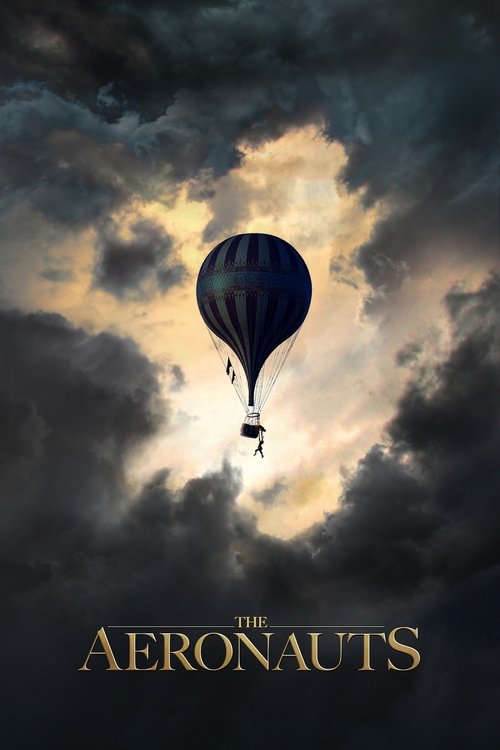





The Aeronauts soars into the stormy skies to present a visually stunning and expansive adventure. The possibilities seem limitless, fueled by the mysterious stars that dominate the night sky. Sparkling points of light shimmer against a dark backdrop. There’s an undeniable drive to explore, to make our world—and ourselves—more secure and predictable. Harper's adaptation of Holmes’ novel, for good or bad, uses artistic license to change historical events in pursuit of entertainment value. While unnecessary when portraying the scientific breakthroughs and record-breaking achievement of the time, Harper’s bold and adventurous story moves quickly through the upper atmosphere with vibrant imagery. Meteorologist Glaisher and balloon pilot Rennes attempt to surpass the world record altitude of 23,000ft, but soon find themselves fighting for survival as their minds become affected by a lack of oxygen. As I mentioned, artistic license is an important element in filmmaking. An irresponsible alteration of history could damage real events if handled poorly; conversely, it can be used to highlight a significant moral message while still respecting the past and its accomplishments. Harper and Thorne balance on this line, precariously floating through inaccurate depictions. Removing Glaisher’s scientific partner Coxwell and replacing him with the fictional Rennes felt clumsy. Without any acknowledgment of his existence, The Aeronauts clearly aims for light entertainment—and that's perfectly acceptable. However, using Glaisher’s actual persona while inventing a character to take his place diminished Coxwell’s contribution. That said, introducing Rennes and making her story central inspires female empowerment during the restrictive Victorian era. Her lack of expertise in Glaisher’s field resulted in an accessible screenplay that allowed audiences to easily connect with her. She becomes the human element within this aeronautical adventure, establishing herself as the main protagonist—a refreshing change from Redmayne and Jones' previous collaboration in 'The Theory of Everything'. This shift enabled Jones, who delivered a captivating performance, to portray a physically demanding and emotionally vulnerable journey. Rennes’s personal tragedy impacts her stability, testing her innate ability to survive. They ride through violent storms, battle oxygen deprivation, ascend a freezing balloon while fighting frostbite at 36,000ft. It's disappointing that Redmayne rarely deviates from his usual awkward portrayal. Harper’s emphasis on teamwork and partnership allows the film’s message to shine through: some reach for the stars, others help others get there. The use of flashbacks avoids a straightforward narrative and adds appropriate backstory without detracting from the excitement of their gradual ascent. The abrupt cuts do create an uneven rhythm, particularly when they narrowly escape a raincloud only to be interrupted by a London societal debate, but the stunning visuals and Price’s intense score quickly restore the sense of adventure. Without question, these are the best panoramic views of the year. An endless expanse of cumulus clouds envelops you in an overwhelming horizon, conveying the solidarity of these two daredevils. When they reach their highest point, I was on the edge of my seat—it’s truly thrilling! The Aeronauts, despite its historical inaccuracies and fictionalized elements for entertainment purposes, provides a wonderfully exciting adventure that remains both grounded in storytelling and filled with exhilaration. I don't think I'll be taking any hot air balloon rides anytime soon...
On September 27, 2026
#18818▼ 5301
18818th by Pulse movie online24.9PULSEPulse MeterOur daily Pulse Meter measures public activity and popularity signals across the web.How it works →