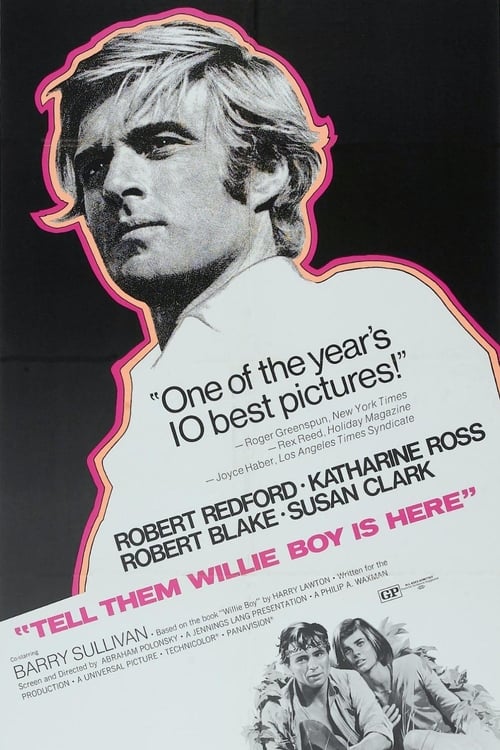




The movie features striking desert landscapes, contemporary filmmaking techniques, and a strong cast, though it takes considerable liberties with historical accuracy. Based on the factual account of what was considered the West’s final significant manhunt in 1909, the story centers around Willie Boy (Robert Blake), a Chemehuevi-Paiute Indian who kills someone in self-defense and flees into the desert wilderness alongside an Indian woman (Katharine Ross). A posse led by Sheriff Cooper (Robert Redford) pursues them while local communities prepare for President Taft’s visit. Redford was at his career peak following his successes with “Butch Cassidy and the Sundance Kid” (1969) and “Downhill Racer” (1969), and "Tell Them Willie Boy Is Here" received positive reviews upon release. Despite being a moderate box office success, it didn’t reach the popularity of those earlier films, particularly "Butch Cassidy," and has since largely faded from view, rarely appearing on lists of great Westerns. Alongside “Hombre” (1967), “Butch Cassidy,” and upcoming Westerns like “The Missouri Breaks” (1976), “Willie Boy” belongs with the innovative Western films of the 60s and 70s. The film remains well-crafted and doesn’t seem dated, even after decades have passed. The director, a self-described communist who was blacklisted during the McCarthy era, made this his major return to filmmaking. The acting is excellent, with Susan Clark also standing out as a condescendingly liberal white missionary, and the desert scenery is impressive. However, the initial portion of the film feels slow, and the plot doesn’t really gain momentum until around 50 minutes in. Nevertheless, it's a worthwhile Western from the late 60s for those who appreciate that style of filmmaking. What detracts from its value is the movie’s liberal distortion of historical facts to align with the then-popular theme of portraying Native Americans as tragic victims. The real Willie Boy was in his twenties and kidnapped Isoleta, a 15 year old, for a second time after murdering her father while he slept. He treated Isoleta poorly, and when she could no longer walk, he shot her in the back; her clothing was tattered, her body bruised and swollen with cactus needles embedded in her skin, and her feet were bloody from worn-out shoes. Ultimately, Willie Boy took his own life using his last bullet, and his body was discovered after a predominantly Native American posse tracked him for eleven days across over 500 miles of desolate terrain. In essence, Willie Boy killed two people; yet the film portrays him as an oppressed figure victimized by those in authority. The movie has a running time of 1 hour and 37 minutes and was filmed in Southern California’s deserts—specifically Banning, Pioneertown, Joshua Tree, Riverside, Palm Springs, Whitewater, and Lake Sherwood. GRADE: C
On October 4, 2026
#34924
34924th by Pulse movie online2.0PULSEPulse MeterOur daily Pulse Meter measures public activity and popularity signals across the web.How it works →