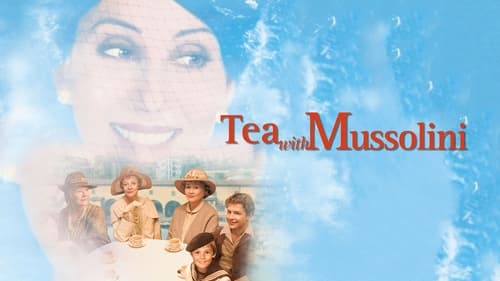




The “Scorpioni” are a group of privileged British women residing in Florence during the 1930s, led by "Lady Hester" (Dame Maggie Smith), the widow of the former British Ambassador. She harbors some understanding for “Il Duce’s” ambitions. They occasionally must put up with the presence of the boisterous and wealthy American actress “Elsa” (Cher), but even as fascism grows stronger, that seems to be their only real problem. One of them, "Mary" (Joan Plowright), is a kind person who has taken young "Luca" (Charlie Lucas), recently orphaned, under her care—and this creates a connection between her and the American, who also cares deeply for the boy and wants to secure his future. As civil unrest begins to disrupt their afternoon tea, “Lady Hester” becomes upset and requests a meeting with Mussolini, where she secures a promise of personal protection from him. It’s likely he forgot about that promise as soon as she left his palace, but armed with a photograph of the two together, she assumes he will keep his word. When war breaks out between Italy and Britain, the women are forced into a dormitory and then to a hotel, still believing they're being looked after. We quickly discover who their supposed guardian angel really is, and when the US enters the war, even “Elsa” finds herself in a difficult situation. "Luca" (now Baird Wallace) has become involved with the resistance and tries to help the women where he can, but following an important misjudgment by “Elsa,” nearly everyone faces danger from the Gestapo. The narrative feels somewhat drawn out, but the beautiful settings in Florence and Siena, along with the lovely sunshine on the stonework, give the film a gorgeous visual quality. The ensemble cast is impressive, and it’s worth noting Dame Judi Dench's performance as the rather windswept artist “Arabella” and Lily Tomlin’s frequently scene-stealing portrayal of the no-nonsense "Georgie"—possibly the only woman among them with her wits about her. There’s a sense of empire fading throughout the story, highlighted by a noticeable shift in attitudes toward English versus German language instruction at school, and the writing includes some humor as we follow these women who, I must say, never seemed to have much awareness of what was truly happening in the world. The film covers almost an entire decade and features considerable jumps in time, but this actually works well to show the stark changes in their attitudes and behavior as the war progressed. Could it be autobiographical from Zeffirelli? It has a somewhat haphazard authenticity that suggests some of these characters might have been real or nearly so, and the overall pleasantness makes it worth watching—just to see these talented professionals both in front of and behind the camera at work.
On September 24, 2026
#13715▼ 49
13715th by Pulse movie online31.5PULSEPulse MeterOur daily Pulse Meter measures public activity and popularity signals across the web.How it works →