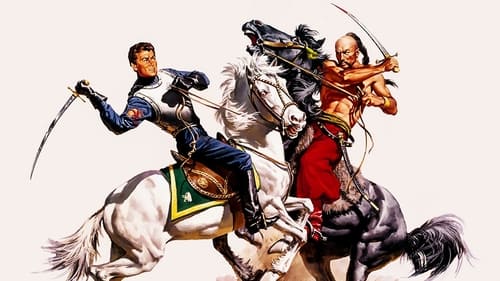




J. Lee Thompson directed Taras Bulba, with Waldo Salt and Karl Tunberg adapting Nikolai Gogol’s story for the screen. The film stars Yul Brynner, Tony Curtis, Christine Kaufmann, and Perry Lopez, and comes from United Artists as a DeLuxe/Eastman Color/Panavision production, featuring music by Franz Waxman and cinematography by Joseph MacDonald. The narrative, loosely based on Gogol’s short novel, recounts a Cossack rebellion against Polish forces who have taken control of Ukraine. At the heart of the Cossack army is their leader Taras (Brynner) and his two sons, Andrei (Curtis) and Ostap (Lopez). The situation becomes complicated when Andrei falls for a Polish princess named Natalia (Kaufmann), creating divisions within the Bulba family while the Poles seek the Cossacks’ assistance in defeating the Turks. While the film itself isn't as grand as the story it tells, the production history was troubled enough to explain why Taras Bulba doesn’t quite live up to its potential. A major issue lies with the casting, specifically Curtis as the elder son. Burt Lancaster had been slated for the role but dropped out, and Curtis stepped in, shifting the focus of the film onto him and relegating Brynner's titular character to a supporting position—so much so that it might have been better titled “Andrei Bulba.” Curtis could be an actor when he put his mind to it, but he feels misplaced portraying a Cossack with both intelligence and strength. The situation was further complicated by the breakdown of Curtis’ marriage to Janet Leigh, whose illness and observations on set likely added tension, especially given Curtis' subsequent marriage to Kaufmann shortly after their divorce. The writers also bear some responsibility, allowing the romantic subplot between Andrei and Natalia to dominate the narrative. Salt & Tunberg were brought in after Howard Fast (Spartacus) refused to soften the screenplay, which originally included a depiction of Cossack anti-Semitic violence against Polish Jews. The filmmakers balked at this inclusion, resulting in an overemphasis on the love story and some rather cheesy dialogue. Brynner’s biography reveals that he deeply cared for this role and had ambitious plans for his portrayal, but the producers didn't share his vision. It’s a disappointment because Brynner’s moments are wonderfully energetic, powerful, and undeniably captivating. However, when Taras Bulba works well, it is genuinely impressive, and thankfully it never becomes boring, even if the middle section feels somewhat lighter in tone than intended. Thompson was a skilled director of action and suspense, and he demonstrates this ability effectively here. Aside from some obvious stunt doubles and fake horses, the sight of thousands of men on horseback across the Steppes (filmed in Argentina) is spectacular. The battles are intense, violent, and gripping, while scenes within the Cossack camps are filled with revelry as men drink, sing, and test their courage—all presented in a robust, Viking-like fashion that’s still entertaining. There's also some exciting swordplay, alongside suspenseful moments during a challenge to death over a deep gorge. Joseph MacDonald’s Panavision photography beautifully captures the expansive landscapes, enhanced by Eastman Color which provides an appropriate period feel. Waxman delivers a powerful score infused with Russian influences, and the costume designers deserve recognition for their work, particularly in creating the look of the Polish army, who appear as dashing men of steel. Yes, it’s a film riddled with flaws and questionable decisions, but ultimately the positives outweigh the negatives, and it's rewarding to witness this lesser-known piece of "bloody" history on screen. 7/10
On September 24, 2026
#18532▼ 2583
18532nd by Pulse movie online25.4PULSEPulse MeterOur daily Pulse Meter measures public activity and popularity signals across the web.How it works →














