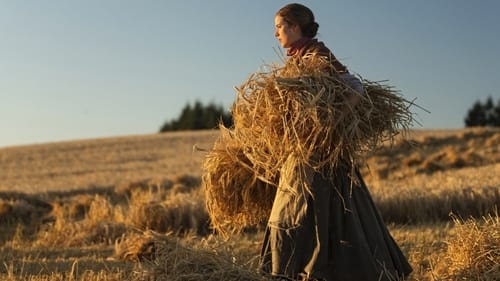





This is a powerful drama that explores a life, specifically what it’s like to be a female farmer living in Scotland during the early twentieth century. The film is based on a book of the same name which deals with rural Scottish themes. Even though I hadn't read the original novel, I would say this is one of the best adaptations from book to screen that I’ve seen. While it has a considerable length, the story unfolds deliberately and steadily, and the runtime wasn’t an issue for me. My only regret is that it wasn't filmed in Scottish Gaelic, given its focus on a Scottish family. There were several Scottish dialects that initially went over my head, so I needed to look them up to understand their meaning. However, I appreciated this detail because it felt true to the local culture and essential for conveying the story’s richness in its original flavor. The narrative is set in the 1910s and centers on a farm girl named Chris. It's an epic journey from adolescence to adulthood. Under her harsh father, we see how the entire family lived in constant fear. Following a death within the household, events begin to slowly fracture the family, leaving Chris responsible for making crucial decisions about both her future and the family’s land. Some viewers might find the beginning slow-going because it takes time to grasp what's happening. But if you persevere through the first half, you’ll likely enjoy the rest of the film considerably. It isn't a story we necessarily know or expect; instead, it portrays the unpredictable twists and turns of life, much like our own experiences but set in a different era. Ultimately, this film is about the various phases of life—like shifting gears in a car to adjust to road conditions and your destination. Joy and sorrow are inevitable parts of existence, often shaped by choices we make ourselves and those around us. “You will need to face men for yourself. When the time comes, there's no one can stand and help.” The film was surprisingly moving and brought to mind ‘Gone with the Wind’ and ‘Love Comes Softly.’ It primarily focuses on a woman navigating a world dominated by men. Beyond the rural setting, it touches upon broader issues like how Scots lost their rights and culture under English rule during World War One—which likely explains why so many in Scotland desire independence. The romantic elements provided another significant turning point, representing resilience after hardship. After witnessing numerous changes, I couldn’t predict where the story would lead, but the conclusion felt purposeful and featured some truly wonderful dialogue. I especially loved the beautiful scenery showcasing different seasons; it was filmed in New Zealand, Scotland, and Luxembourg. The locations are fairly limited, primarily centered around a farmhouse with occasional excursions elsewhere. The actress portraying Chris gave an outstanding performance, as did Peter Mullan—as always—and the rest of the supporting cast during their appearances. As the story progresses, the characters evolve and change. For the audience, too, Chris undergoes a significant transformation from adolescence to self-discovery. The film effectively depicts this evolution, much like how a landscape changes from dawn to dusk, mirroring the course of a woman’s life—which is what the title suggests. I wasn't familiar with this British director before, but this film has inspired me to explore his other works. I can’t guarantee everyone will enjoy it, but it's certainly one of the best dramas of 2015 and I recommend it, particularly if you don’t mind a longer story told at a slower pace. I hope they adapt the remaining books in the series as well. 8/10
On September 23, 2026
#58972▼ 26462
58972nd by Pulse movie online9.0PULSEPulse MeterOur daily Pulse Meter measures public activity and popularity signals across the web.How it works →














