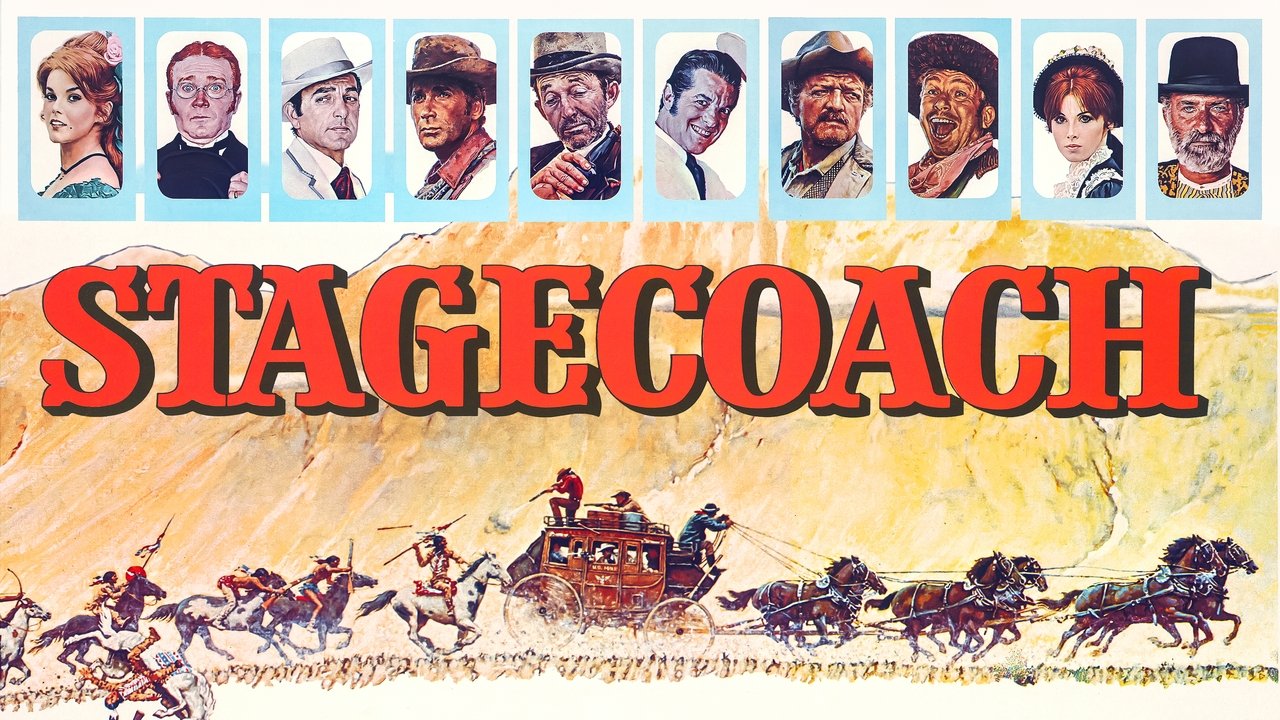




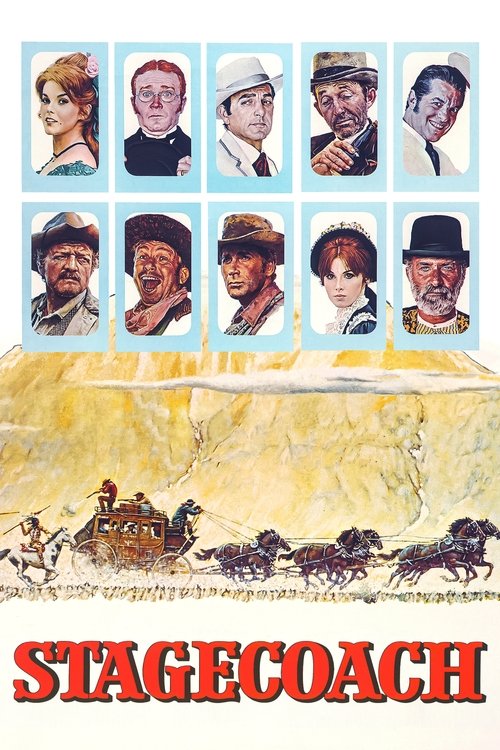
This is a worthwhile color version of the classic Western, featuring Ann-Margret, Van Heflin, and Alex Cord. The 1966 film "Stagecoach" presents a color remake of the well-known black and white Western from 1939, with another adaptation following in 1986 starring country music artists of that time. The narrative centers on nine individuals around 1880 who travel by stagecoach through a mountainous region where Native Americans are engaged in conflict. The group includes a somewhat comical driver (Slim Pickens) and his shotgun, a lawman (Van Heflin), and inside the coach are an ostracized prostitute (Ann-Margret), an escaped convict called the Ringo Kid (Alex Cord), a pregnant woman traveling to reunite with her military husband (Stefanie Powers), a sophisticated Southern gambler who knew the lady’s father during the Civil War (Mike "Mannix" Connors), an alcoholic physician (Bing Crosby), a dishonest banker (Bob Cummings), and a timid whiskey salesman (Red Buttons). The initial two-thirds of the movie largely focus on character development as the group journeys across the high country, stopping overnight in various locations. The final third involves an intense Native American attack and the Ringo Kid resolving old conflicts. Compared to the 1939 version, the story has been expanded; there’s more action, and the Native American assault is exciting, displaying impressive stunt work. What was a brief climatic confrontation in the earlier film becomes a larger shootout accompanied by a saloon fire. Furthermore, this rendition benefits from color cinematography and feels generally more contemporary than the older 1939 version. Despite significant changes since the late 1800s, some things remain constant. Human nature persists across time periods, and certain behaviors or lifestyles will never be widely accepted regardless of how “progressive” (or degenerate) society becomes—such as prostitution or drunkenness. These are simply inherent realities. The movie succeeds because it effectively introduces the characters and builds suspense regarding the Native Americans’ actions. The outcasts demonstrate their value in one way or another, driven by a desire for redemption or to correct past wrongs. While the doctor may be an alcoholic, no one else present possesses his skills; the saloon girl is repeatedly ignored or disrespected until the Ringo Kid defends her honor—an outlaw himself. The marshal has a duty to uphold, but how does he arrest an “outlaw” after they’ve shared a life-or-death experience and that individual was crucial to the group's survival? The year following this remake came "Hombre" (1967), which shares some obvious similarities: both films feature a stagecoach journey with travelers from diverse backgrounds, a respectable citizen carrying stolen money, a coach driver, and an upper-class woman. Both are good movies, but “Hombre” is the stronger of the two; "Stagecoach" feels somewhat dated in comparison, likely due to its 1939 predecessor. The film's running time is 1 hour, 55 minutes (19 minutes longer than the original) and was filmed in the high country of Colorado (Caribou Country Club Ranch at Nederland). GRADE: B+/A-
On September 20, 2026
#14781▼ 363
14781st by attention movie online29.8Attention ScoreAttention ScoreOur daily Attention Score measures public activity and popularity signals across the web.How it works →