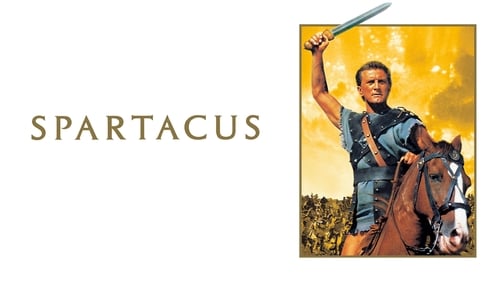





This historical epic runs for three and a half hours, and while it has some impressive production elements, it isn’t flawless. The story deviates from established history, drawing instead from a 1951 novel by Roward Fast, which incorporates romanticized events that likely didn't happen. While certain aspects are rooted in historical figures like Crassus, Grassus, and Julius Caesar, the narrative takes considerable liberties. Kirk Douglas portrays Spartacus, a Thracian slave forced to labor in Etna’s sulfur mines. His volatile nature leads him toward starvation, but he is then taken on by a Roman who trains gladiators. He quickly excels at this profession before meeting Varinia, a Britannia woman given to the gladiators, with whom he falls in love. A staged combat between four gladiators, arranged for Crassus’s amusement – a costly entertainment at the time – leads Spartacus to question everything. During one fight, his friend emerges victorious, but Spartacus loses to Draba, an Ethiopian gladiator who refuses to finish him off, prompting a profound shift in perspective. He then orchestrates an escape with other slaves, using kitchen tools to overpower Roman soldiers and seize their weapons. This sparks a slave revolt that spreads through villages and cities, eventually culminating in a camp near Mount Vesuvius. The rebellion throws Rome’s senate into disarray, as the majority of its forces are deployed elsewhere. Spartacus's goal isn’t to conquer Rome but to secure freedom for himself and his followers; he arranges for ships to be available at an Italian port. Crassus, seeking to undermine a political rival, bribes the pirate and enlists Julius Caesar’s assistance in stopping Spartacus. Caesar, disapproving of Crassus's underhanded tactics, informs Spartacus of the plot. With reinforcements arriving from Iberia, Spartacus prepares for a decisive battle. The film suffers from inconsistencies due to its reliance on Fast’s romanticized novel and screenplay by Dalton Trumbo (who was blacklisted during the Cold War). Anthony Mann initially directed before leaving the project, which then passed to Stanley Kubrick, who had previously made "Paths of Glory." Kubrick's talent and unconventional methods were recognized, and he commanded a budget of $12 million (equivalent to roughly $120 million today) with a cast of 10,500 extras. Production faced challenges, including disagreements with cinematographer Russell Metty regarding film format preferences. Universal Pictures president Edward Muhl insisted on filming in Hollywood to showcase the studio's capabilities, resulting in some scenes appearing less authentic. However, large-scale battle sequences were spectacular, utilizing 9,000 Spanish infantrymen filmed from a tower and incorporating crowd noises recorded at a stadium with 76,000 spectators—a likely influence on “300.” The final battle is the film’s strongest point, despite its lengthy runtime and dialogue. Alex North's orchestral score, employing ancient instruments, felt commonplace for the era. Test screenings prompted cuts to scenes depicting violence, such as a graphic arm injury. Ultimately, the movie falls short of true epic status due to a flawed screenplay and production team. With better guidance and music, Kubrick’s vision could have been fully realized. The film inspired Ridley Scott's "Gladiator," and one particularly poignant scene—Spartacus walking through the slave camp before the final battle—remains memorable, highlighting the weight of his responsibility and the uncertain fate awaiting those under his protection; it is noted that the actual Spartacus’s ultimate destiny remains unknown. The film received four Academy Awards: Best Supporting Actor (Ustinov), Cinematography, Art Direction, and Costume Design, from six nominations, and was considered a success given the different revenue standards of the time. I appreciate Kubrick's boldness in tackling this project, which had the potential to be even better. I give it a grade of B, or 7 out of 10. Version watched: Criterion Collection 2015 4K restoration based on a 1991 restoration of the original film.
On September 24, 2026
#1394▲ 362
1394th by Pulse movie online53.3PULSEPulse MeterOur daily Pulse Meter measures public activity and popularity signals across the web.How it works →