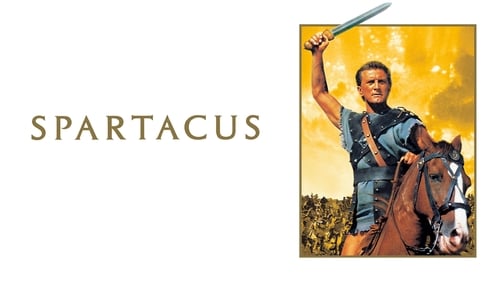





This sword-and-sandal epic has everything you could want. Spartacus tells the story of a Thracian slave who refused to be controlled by the Romans, leading a revolt that shook the Roman Republic around BC 73. The film draws from this historical period. The making of *Spartacus* was complicated; original director Anthony Mann was dismissed by Kirk Douglas (who plays Spartacus) due to disagreements. Some of Mann's work remains in the final version, particularly some early desert scenes believed to be under his direction. Stanley Kubrick then stepped in as director, collaborating with Douglas to create what is arguably the greatest sword-and-sandal epic ever made—a film that still holds up and serves as a great starting point for anyone interested in the genre. Adapted by Dalton Trumbo from Howard Fast's novel, and also drawing on Arthur Koestler’s *The Gladiators*, *Spartacus* is a moving experience emphasizing the strength of unity when confronting oppressive power. The film features many well-developed storylines and is a testament to Trumbo’s excellent writing, which was once suppressed due to his blacklisting. Political themes are important throughout, while a romantic element runs through the violence and power struggles. Strong bonds develop among the slave army, and the romance between Spartacus and Varinia is fully realized, setting the stage for what happens in the film's second half. The movie contains many memorable scenes, including the gladiator training school where Spartacus and his fellow slaves discover their own worth—forced through a rigorous program designed to prepare them for bloody entertainment for the Roman elite. The breakout sequence itself is powerful, but even that pales in comparison to the main battle scene that Kubrick directs with skill. The sight of the Roman legions forming with military precision is striking (and this was all done before CGI, demonstrating Kubrick's exceptional ability to direct large numbers of extras). The ensuing battle is breathtaking and a high point for the genre. There’s also a sentimental side to *Spartacus*. While Kubrick wasn’t known for sentimentality, he and Douglas successfully manage to evoke emotion while simultaneously delivering action, culminating in an incredibly poignant and classic ending that remains cinematic gold. The cast is exceptionally well-chosen; Douglas delivers a fantastic performance as Spartacus—big, lean, brooding, and full of emotion, which I consider one of his best roles. Laurence Olivier portrays the villainous Marcus Crassus with just the right amount of sneering theatricality required for such an unsavory character. Peter Ustinov (Best Supporting Actor winner) is at his finest as Batiatus; Jean Simmons (with her classically beautiful features) works well opposite Douglas as Varinia, while Tony Curtis (Antoninus), John Gavin (Julius Caesar), and Charles Laughton (Graccus) add to the film’s overall quality. *Spartacus* also received Academy Awards for Best Color Cinematography, Best Art and Set Direction, and Best Costume Design, with deserved nominations going to Alex North for his score and Robert Lawrence for editing. It's a remarkable film, skillfully made and thematically powerful. While it is technically impressive, the story itself truly shines. Even allowing for some typical Hollywood embellishments of the actual historical events (Spartacus certainly didn’t meet his end as depicted in the movie), it's emotionally charged and inspiring, yet tragically sad. 10/10
On September 24, 2026
#1394▲ 362
1394th by Pulse movie online53.3PULSEPulse MeterOur daily Pulse Meter measures public activity and popularity signals across the web.How it works →














