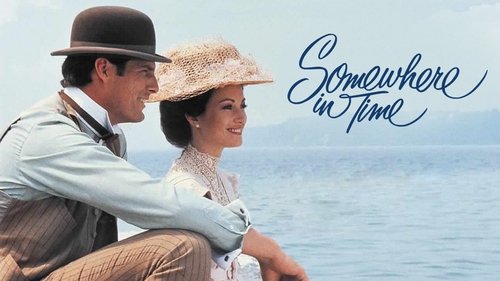





It’s a film that's been largely forgotten, yet it warrants another look despite its shortcomings. I enjoyed this movie; it feels like one of those films that quickly disappeared from view, which seems unfair because it’s better than many higher-budget and more heavily promoted productions—though it does have significant issues, which I will discuss. It's possible that very few people, beyond the filmmakers and performers, truly believed in it: it didn't get much support from studios or theaters, it was a big hit in Asia but mocked in the USA, while Europe seems to have overlooked it entirely. The film features a talented, though relatively small, cast. Christopher Reeve was still benefiting from the success of “Superman,” but he put considerable effort into this smaller project. He’s a dependable lead, and his performance is one of the elements that propels the film forward and gives it quality. Alongside him is Jane Seymour, who was quite young at the time, delivering a dignified performance with excellent chemistry with Reeve. Christopher Plummer fared less well; the actor, whose credentials and talent are undeniable, received a stereotypical and somewhat artificial character because a villain was needed for the plot and had to be someone sufficiently worthy of disapproval. This brings us to the script, which has both strengths and weaknesses: the story centers around a sort of mystical connection between Richard Collier, a modern-day playwright, and Elise McKenna, a young and successful actress from the past. They initially meet at the film's start when she, now elderly, hands him a watch and says a few brief and enigmatic words. Eight years later, he becomes intrigued by a young woman depicted in 1912 within a room in an old hotel, discovering her identity. He then decides to try self-hypnosis to travel back in time and find her. The script essentially creates a scenario of love at first sight where the object of affection is a photograph of someone who has long since died and whom you’ve never met. The concept itself seems strange, and things don't improve when we introduce time travel and ideas about regression and self-hypnosis, which will likely only appeal to those interested in “new age” concepts. Perhaps it would have been better to use a more conventional method of time travel, such as a machine, portal, or "wormhole." Technically, the film excels due to the choice of filming location (the hotel still exists and can be visited) and the design of the sets and costumes, which are full of detail and well-made, deserving of the 1981 Oscar nomination. The editing is fairly standard; the film unfolds at a measured pace but doesn't have any slow moments. The cinematography uses warm colors, and the soundtrack combines two distinct, yet compatible, elements: Rachmaninoff’s excellent Rhapsody on a Theme of Paganini Op. 43 and a hypnotic and striking melody composed by John Barry.
On September 23, 2026
#3483▼ 1332
3483rd by Pulse movie online49.1PULSEPulse MeterOur daily Pulse Meter measures public activity and popularity signals across the web.How it works →