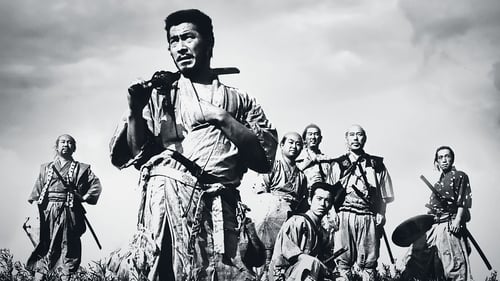





Perhaps it’s a little overrated, but there’s no question that it's good. I need to begin with something important for context: this was the first Japanese film I recall seeing. It’s possible I’ve seen others and forgotten them, but I don’t think so. Because of this, I’m not a reliable expert on Japanese cinema, so I don’t want anyone to take my opinion too seriously. Some people seek that authority; I do not. As with all my reviews, I'm simply sharing what I think, based on my limited understanding, and without trying to sound important. I might be right about some things, or wrong about others – that’s perfectly normal. I decided to watch this film because it had been highly recommended and was considered excellent; everyone said it was a really good movie, so I wanted to see for myself. I just finished watching it, and did a little reading about the film and its director, the well-known Akira Kurosawa. The film is certainly above average in quality, but it’s not one that will appeal to everyone, and it seems to me to be somewhat overhyped, which can be detrimental. I say this because there were moments when the film didn't quite live up to my expectations; I have a fairly neutral perspective on this type of movie – I don’t particularly love it nor do I dislike it. The story is set roughly in the mid-16th century, during a time when Japan was fractured into feuding kingdoms and frequent internal wars involving samurai were common. Naturally, in such circumstances, ordinary people suffer the most, and those with little power are always vulnerable to exploitation by those who hold it. This film depicts just that: a rural village regularly plundered and devastated by an armed group until they decide to hire some wandering samurai for protection. They succeed in this goal, and we’re shown all the effort involved in preparing for defense and training the villagers in combat. I'm going to approach this differently and start with what I found most positive. First, it seems clear that Kurosawa put a great deal of care into his work and has genuine affection and respect for his country’s traditions and history. Otherwise, you wouldn't understand the amount of effort and money invested in a film with such cultural and historical significance. How much did this influence European cinema, or vice versa? I’m sure film students have discussed it. What I can say is that there’s a commitment to realism evident in things like the detailed set design, costumes, and deliberate cinematography—it's very elegant and sharp. The script itself is quite strong, delivering a believable story with well-developed and memorable characters. While I’m not familiar with the actors, I think Toshiro Mifune deserves recognition for his dedication and performance; he commands attention effortlessly and possesses undeniable charisma. However, there are also some drawbacks to consider, beginning with the film's length—over three and a half hours. Unfortunately, I feel that the story didn’t really warrant so much time, and Kurosawa didn’t manage the pacing very well. With tighter editing, he could have trimmed it down to around two hours without losing too much, making it less of an ordeal. We don't need to see every village discussion or every training exercise. I also wasn't fond of the attempts at humor; they simply weren't funny. The story’s predictability is another flaw. Finally, I didn’t like the almost complete absence of a musical score—I’ve seen that in other films and have never been particularly keen on that stylistic choice.
On September 25, 2026
#6063▼ 3916
6063rd by Pulse movie online41.4PULSEPulse MeterOur daily Pulse Meter measures public activity and popularity signals across the web.How it works →