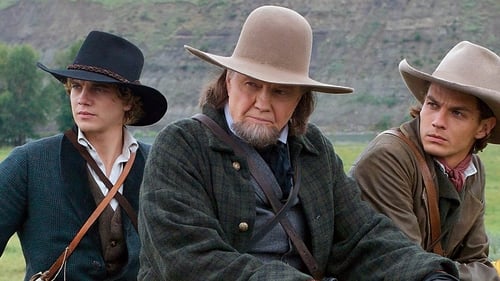




"September Dawn" (2007) is a significant and memorable film. It recounts the long-suppressed massacre at Mountain Meadows, Utah, which occurred on September 7–11, 1857, when a group of Mormons murdered over a hundred settlers traveling from Arkansas to California. These travelers had stopped in southwest Utah to rest and resupply, and the local Mormon residents initially permitted it. However, events unfolded that led to the slaughter of the settlers, likely fueled by anxieties surrounding the brief “Utah War” between federal forces and Mormon settlers, as well as past severe persecutions endured by Mormons in the eastern United States, which prompted them to seek refuge in Utah in 1847. Brigham Young held the position of president of the LDS denomination and was governor of Utah at the time. Was he involved in the decision to kill the innocent settlers? While Mormon leaders deny this even now, it’s conceivable for a couple of reasons: first, as president and governor, it's improbable that an event of this magnitude would have transpired without Young's approval; second, John D. Lee—the only person convicted and executed for the massacre—was Brigham Young’s adopted son. The film suggests that the perpetrators took an oath of silence, which is why LDS officials have kept the massacre hidden, despite Lee admitting he was a scapegoat before his execution. The movie feels very realistic, similar to "Dances With Wolves," though not quite as captivating. For instance, the portrayal of the Paiute natives—who were tricked by the Mormons into participating in the initial attack—is well-executed. The acting is generally strong, with only one minor exception. This sets “September Dawn” apart from many older Westerns that are easy to dismiss. The film’s authenticity may stem from its foundation in historical facts and a fair presentation of them. It draws upon Juanita Brooks' book and other sources, written by devout Mormons. Furthermore, the movie explains the reasons behind Mormon paranoia—both the current harassment from federal authorities and their earlier persecutions back East, which were quite severe. The film also explores a unique doctrine held by the Mormons—"blood atonement"—that led them to believe they were doing the settlers a favor by killing them, suggesting that the settlers would die in this world but be eternally blessed. Some viewers have criticized the inclusion of a romantic subplot between a Mormon youth and a settler girl, which they see as a standard Hollywood device, like those found in "Pearl Harbor," "Red Baron," and “Titanic.” Others object to a Mormon youth’s mental breakdown following the massacre—another fictional addition—but it seems plausible that an inexperienced young man would be deeply affected by such a horrific event. And who's to say something like this didn't actually occur? It’s entirely possible that similar events took place. Although the story is set in southwest Utah, filming occurred in central Alberta, near Calgary, due to obvious logistical issues. While these locations are acceptable substitutes, they lack the drier landscape of southwestern Utah. Ultimately, the harsh criticism leveled at this film seems unwarranted and inaccurate. Though it can be difficult to watch at times, "September Dawn" is a worthwhile modern Western that challenges political correctness and attempts to present the truth based on documented facts. Of course, there’s some speculation and fictionalization, but nearly all films based on historical events incorporate these elements to some degree, as I mentioned earlier, and these additions are grounded in what seems likely. I'm confident that "September Dawn" is more historically accurate than widely praised films like “Braveheart.” The negative reaction to the film may be attributed to an intolerant liberal perspective, since it portrays Christians in a positive light being led to destruction by religious extremists. Not all Mormons then or now fit that description, but those who committed and authorized the massacre of the innocent settlers certainly did, as well as those who influenced otherwise decent men to participate. The film has a running time of 1 hour, 51 minutes. GRADE: A-/B+
On September 24, 2026
#69063▲ 320
69063rd by Pulse movie online7.2PULSEPulse MeterOur daily Pulse Meter measures public activity and popularity signals across the web.How it works →














