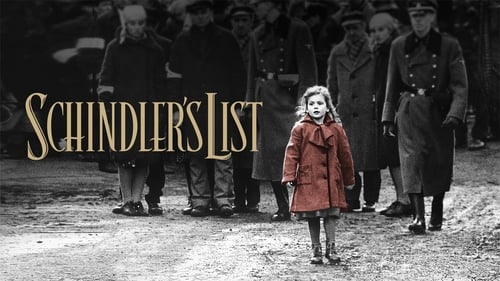




Steven Spielberg’s name carries significant weight, and with good reason—his films consistently draw large audiences to theaters and streaming platforms. This film feels particularly poignant for him because of his personal connection to the Holocaust as a Jew whose grandparents were Ukrainian immigrants. It's something he clearly felt deeply about. After watching “The Kashmir Files,” I found myself wanting to examine how movies can be made without relying on propaganda. While "The Kashmir Files" addresses important truths, it also contains subtle political biases and flaws. Questioning narratives isn’t unpatriotic, and not everyone associated with JNU holds a specific agenda. The film reveals certain realities that deserve attention but simultaneously obscures others. It presents a one-sided perspective, much like a dictatorship would. However, “Schindler’s List” stands apart because it never allows the bleakness of the Holocaust to overshadow its central theme: fighting for what's right. Spielberg explained his intention was primarily educational; many people were unfamiliar with the Holocaust or had only heard vague references to it in textbooks. Keneally’s novel, “Schindler’s Ark,” later known as "Schindler’s List," recounts the true story of Oskar Schindler, a German industrialist who rescued over 1,300 Jews from Nazi persecution. Liam Neeson portrays Schindler, showcasing not only his heroism but also his flaws—he was a womanizer, struggled with alcohol, and even spied for Germany. Despite these imperfections, human nature resists being suppressed, even under oppressive regimes. Character flaws can add authenticity and emotional depth to stories. While “Schindler’s List” is undeniably impressive and admirable, it exposes how propaganda and misinformation can manipulate entire populations and bring down powerful nations—a lesson that India and its people should consider. Following Germany's invasion of Poland in 1939, Oskar Schindler established an enamelware factory in Krakow using both Jewish laborers and Polish workers. Initially motivated by profit, he gradually developed concern for his employees, especially those with whom he interacted daily. Helping Jews became a way to oppose the brutal policies of Adolf Hitler and the SS. He convinced German authorities that his factory was essential and required skilled labor. The list of names destined for rescue wasn't Schindler’s creation; it was compiled by Marcel Goldberg, a Jewish clerk. A line from the movie highlights this reality: “That’s not just Jew hate talk. It’s policy now.” Itzhak Stern, portrayed by Ben Kingsley, represented many individuals during that time. Oskar Schindler presented himself as a virtuous man publicly but had flaws privately; nevertheless, he saved over 1,000 Jews and inspired a film about his life—a testament to how even flawed people can achieve great things. The movie was made on a modest budget of $22 million, defying expectations that films about the Holocaust couldn't be profitable. Spielberg famously declined a salary, deeming it inappropriate. This contrasts with the financial success of “The Kashmir Files,” prompting reflection on the importance of empathy and sensitivity in filmmaking. “Schindler’s List” shares similarities with another Spielberg film, "Bridge of Spies," both exploring negotiation and gratitude respectively—a theme that resonates throughout the movie. Both films are exceptionally well-crafted. The black-and-white cinematography evokes a similar feeling to “KOTA FACTORY,” emphasizing the darkness and emptiness of the subject matter. Art is intended to provoke discomfort, but propaganda often presents a biased narrative portraying its creators as infallible. In one scene, Schindler requests that Goeth spray water on the train cars carrying Jews during a heatwave, offering them a small measure of relief. Goeth responds that doing so would provide false hope—implying that the trains ultimately lead to death. The lists become increasingly ominous as they’re used to determine who is fit for work and who will be sent to extermination camps. Stern's name appears on one such list, but Schindler intervenes to save him. An SS officer dismissively remarks that it doesn't matter which Jew is transported, as keeping track
On September 25, 2026
#184▼ 10
184th by Pulse movie online55.7PULSEPulse MeterOur daily Pulse Meter measures public activity and popularity signals across the web.How it works →














