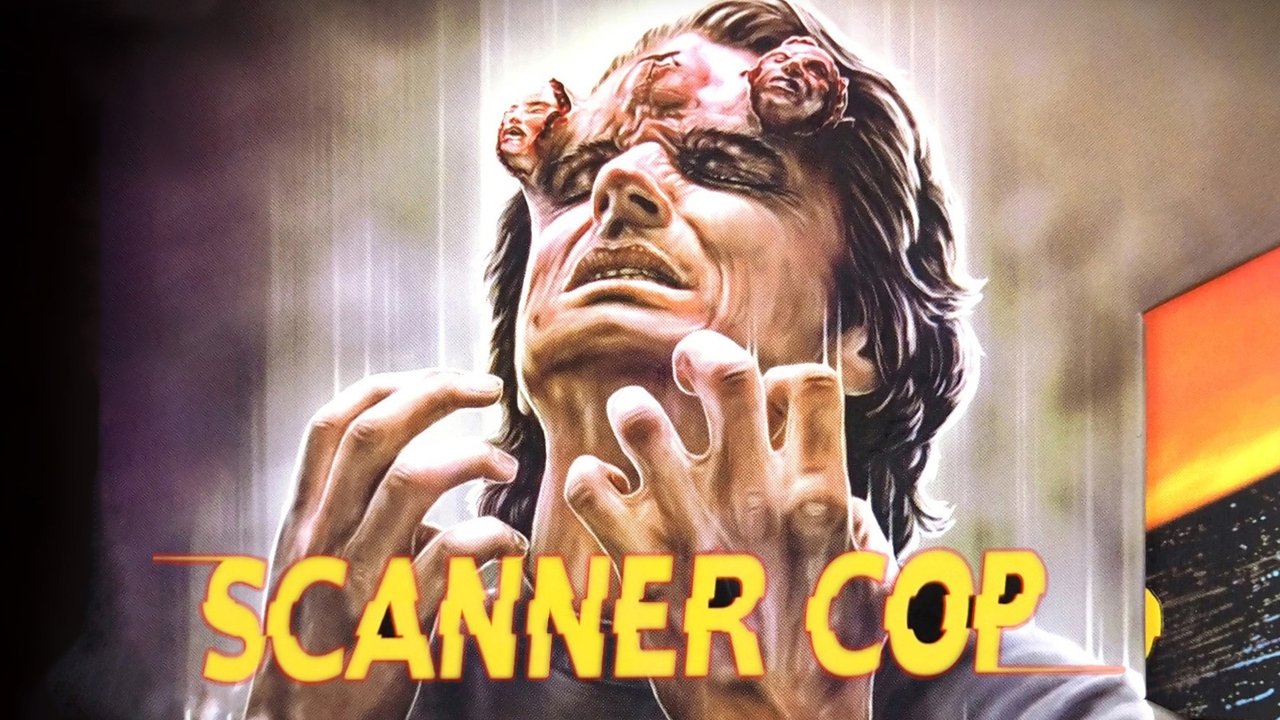




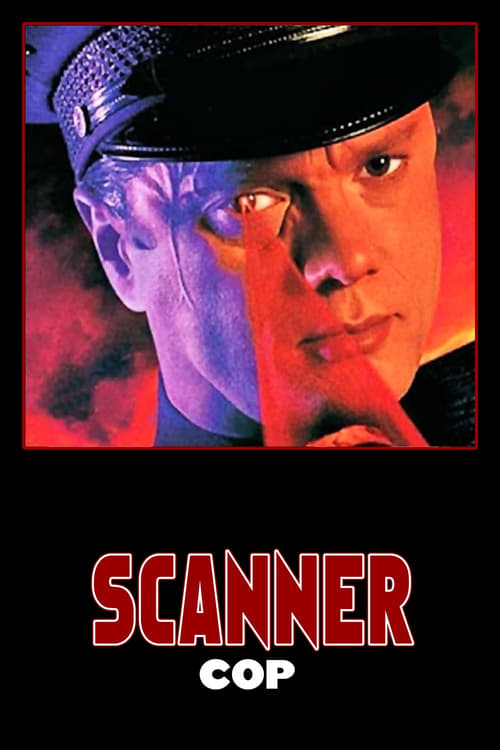
The creators of "Scanners" opted for a significant change in approach with this installment. The story introduces Samuel, a young scanner whose biological father descends into madness. He’s then raised by a sympathetic police officer. As time passes, his adoptive father becomes the police commander, and Samuel Staziak (played by Daniel Quinn) begins his career as a rookie cop. Medication is necessary to manage his scanning abilities, but he assists his father after several officers are killed by seemingly ordinary individuals. It appears Karl Glock (Richard Lynch, in a familiar villainous role) is manipulating people into targeting police as payback for the commander having previously wounded him. The narrative itself isn’t bad, however, the film evokes the feel of older, syndicated television action series like "VIP" or "Silk Stalkings." More exciting action sequences have been seen in "T.J. Hooker.” It seems the entire production budget was allocated to the special effects by John Carl Buechler, which are acceptable with the exception of a particularly funny ending scene involving a defibrillator. The filmmakers also seem to disregard previously established details about the scanners' abilities; we see the scanner cop pursue someone in an elevator by simply taking the next available one. Given that scanners can supposedly manipulate machines, it seems odd he doesn’t just use his power to halt the elevator carrying the suspect. Later, while searching a hospital for his injured father, the scanner cop scans everyone he encounters. The facial distortions and scanning process take longer than simply asking where his father is located. I had a similar response watching "Scanners" I and II. Now that I’ve seen them all, it's time to get some fresh air. This film is completely unremarkable, and I would have preferred the filmmakers to try something more inventive with this formulaic production.
On September 20, 2026
#32371▼ 4880
32371st by attention movie online16.3Attention ScoreAttention ScoreOur daily Attention Score measures public activity and popularity signals across the web.How it works →