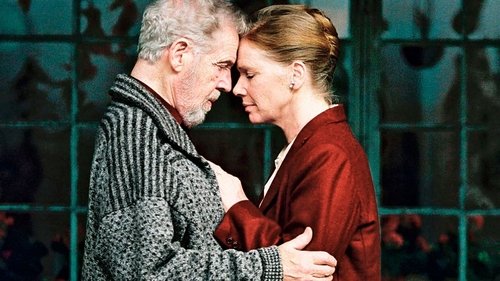




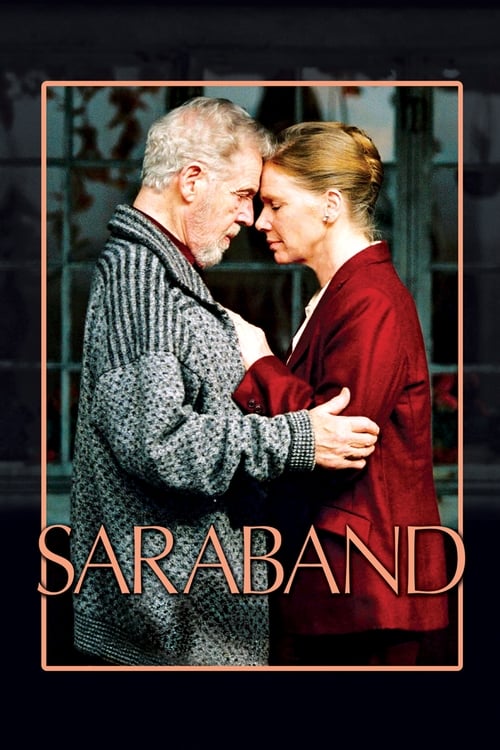
Even though some of Bergman’s camera work and staging have a feel that is contemporary (since this was made for Swedish television), the story and the film as a whole still clearly represent his signature style: the intensely spiritual church scene involving Marianne, the parallel shots of faces lying down, tight close-ups like those featuring Karin and Henrik, and certain wide landscape views that are just so characteristic of Bergman. It’s strange that I watched *A White, White Day* the day before seeing *Saraband*, because it's hard not to compare these two filmmakers who tackle very similar themes: grief, broken relationships, family problems, and an inability to move on. It feels like putting a young Icelandic boxer up against Mohamed Ali. Hlynur Pálmason created a decent film about a man overwhelmed by grief and suspicion; Ingmar Bergman made a masterpiece concerning how suffering is passed down through generations and how some emotional injuries spread. Ingmar Bergman, above all else, is the world’s leading playwright of complicated relationships and the realities within human interactions. *Saraband* embodies this, shaped by Bergman's extensive life experiences. Thirty years after *Scenes from a Marriage*, Marianne (Liv Ullmann) visits her former husband Johan (Erland Josephson) and finds herself caught up in an upsetting family drama. The film isn’t really about Marianne and Johan's relationship; they have accepted their divorce. Instead, it examines Johan's unhealthy connection with his son Henrik (Börje Ahlstedt) and the unsettling closeness between Henrik and his daughter Karin (Julia Dufvenius). This is how trauma reverberates, how the shortcomings of one generation can hinder the next. Julia Dufvenius isn’t on Liv Ullmann’s level from when *Scenes* was filmed, but she performed remarkably well here. She delved deep enough into what's unsaid to build a believable character—someone held captive by forces they barely comprehend. Ullmann and Josephson, returning to their roles after three decades, bring a sense of weight and exhaustion; these are people who can observe the younger generation’s struggles with empathy but have no way to prevent them. What’s noteworthy is that while Bergman isn't generally known for his attention to film scores, in *Saraband*, the music functions almost like another character. The film’s title refers to a baroque dance movement, typically introspective and somber, and that musical form shapes the film's rhythm and tone. Bach’s cello suites appear throughout, played by Karin, and the music serves as an outlet for feelings these damaged individuals can’t express verbally. As Karin matures, the soundtrack shifts to Schumann, moving from solo pieces to arrangements with multiple instruments, creating a sense of safety for her. This was Bergman's last film, and it makes for a suitable farewell: bitter, unrelenting, yet containing moments of grace. Roger Ebert described it as "powerfully, painfully honest," and that’s precisely what it is. Bergman doesn’t offer solutions or forgiveness; he shows us people trapped in cycles they can’t break free from, love transformed into control, grief hardened into cruelty. That's the distinction between a master and everyone else. Bergman reveals truths we would prefer to ignore, and does so with such accuracy that we cannot turn away.
On September 22, 2026
#33811▲ 5984
33811th by Pulse movie online15.8PULSEPulse MeterOur daily Pulse Meter measures public activity and popularity signals across the web.How it works →














