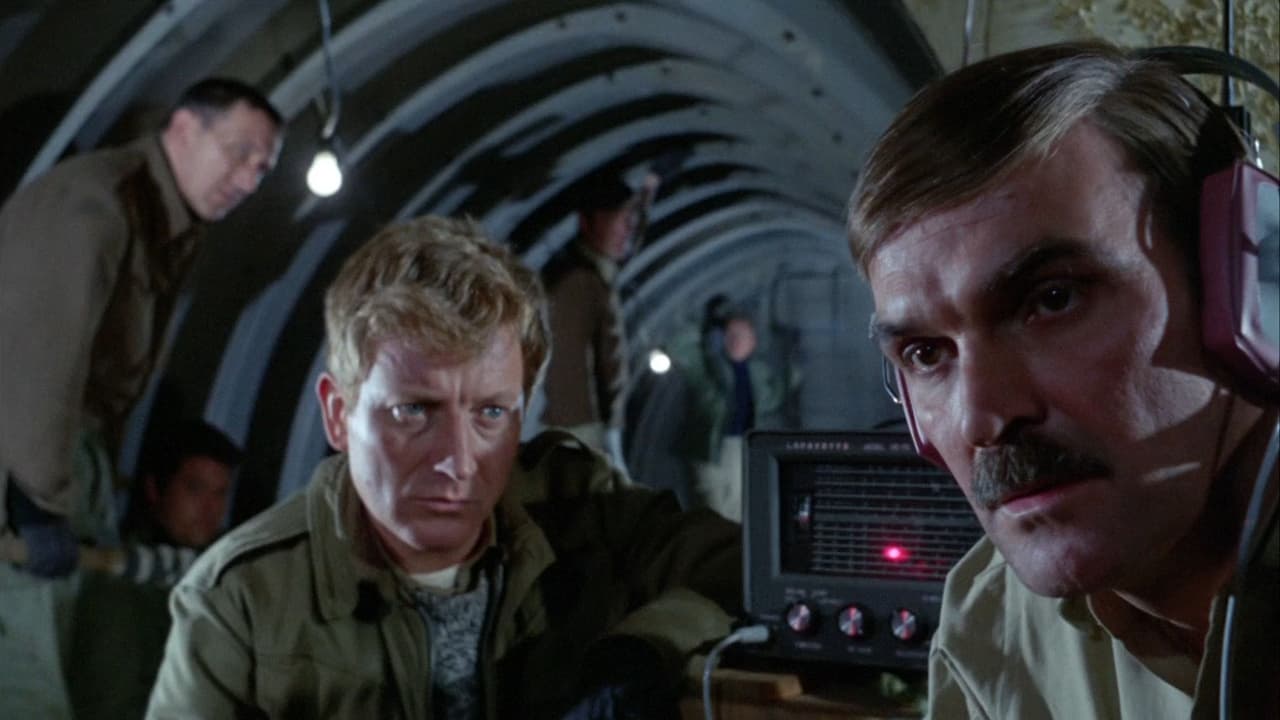




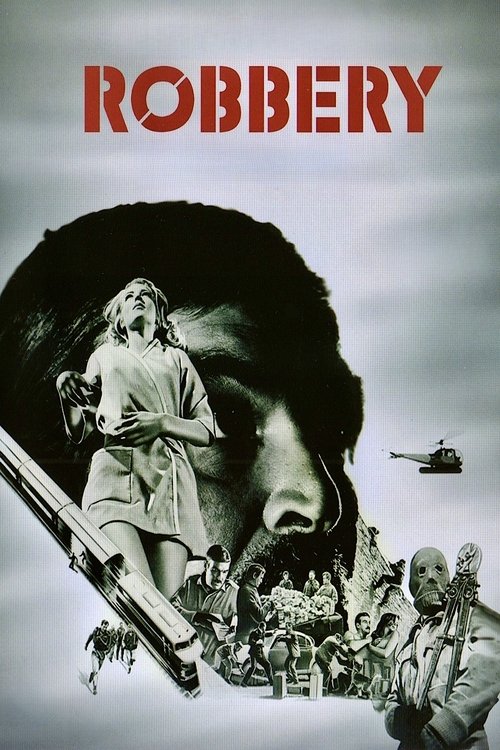
The Robber’s Tale. Robbery is directed by Peter Yates and features a screenplay by Yates, Edward Boyd, and George Markstein, based on The Robber's Tale by Peta Fordham. It stars Stanley Baker, James Booth, Frank Finlay, Joanna Pettet, Barry Foster, William Marlowe, George Sewell, and Clinton Greyn. Johnny Keating composed the music, and Douglas Slocombe was in charge of cinematography. Like a pair of sturdy work boots, Robbery offers a fictionalized account of the Great Train Robbery of 1963, when the London to Glasgow mail train was relieved of its £2.6 million cargo. The robbery was considered daring and remarkably clever due to its detailed planning and execution. Coming just four years after the actual event, Yates' film uses the basic facts of the crime as a foundation for a dramatic story. The movie is divided into three distinct sections. First comes a thrilling diamond heist that introduces several key players involved in the upcoming train robbery. This section includes an incredibly exciting car chase—one of the best ever filmed, with inventive camera work and impressive choreography set to minimal dialogue. Steve McQueen was so impressed that he immediately arranged for Yates to be brought to Hollywood to direct Bullitt. The second part forms the substantial middle portion of the film, focusing on those orchestrating the robbery. It depicts the planning process, the recruitment of various criminal groups in London, their meetings, arguments, anxieties, and even a scenario where ringleader Paul Clifton (Baker) arranges for a currency expert to be released from prison. Throughout this time, as these criminals move around different locations—bars, clubs, football fields, and homes—the police investigation unfolds alongside them. The twist is that Inspector George Langdon (Booth) and his officers are aware that something significant is being planned, they know who’s behind it, but not what exactly, forcing them to wait anxiously for a clue or the event itself. The final section portrays the robbery and its immediate consequences: the robbers hiding out as the police close in. The robbery sequence is gripping, cleverly executed, and filmed with such gritty realism that it immediately captures your attention. The climax, set at an abandoned airfield, is also exciting; because we’ve become invested in the main characters on both sides of the law, you're completely drawn into their fates. Yates and his cast are performing well, with Baker and Booth being particularly strong. The film feels full of British talent! Slocombe’s photography keeps things simple, which is appropriate for creating that documentary-like feel, and Keating’s score is intense at times. Those who appreciate 1960s London as a backdrop will find it richly rewarding. Pettet's portrayal of Clifton's wife feels somewhat underdeveloped, and the middle section inevitably struggles to maintain the pace established in the first quarter of the film. However, these are minor issues; Robbery is a robust British movie, strong and sharp, and ultimately, quite enjoyable. It earns an 8/10.
On September 20, 2026
#18442▼ 225
18442nd by attention movie online25.3Attention ScoreAttention ScoreOur daily Attention Score measures public activity and popularity signals across the web.How it works →