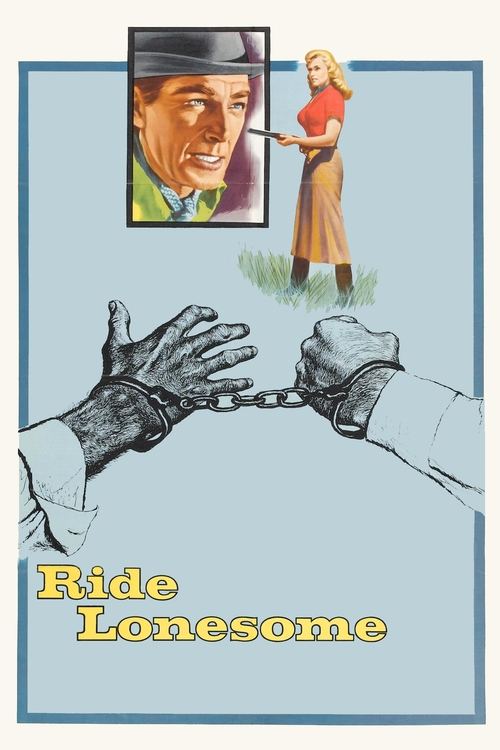




It’s hard to imagine someone who wouldn’t seem out of place hunting a man for money. Ride Lonesome was directed by Budd Boetticher, written by Burt Kennedy, and stars Randolph Scott, Karen Steele, Pernell Roberts, James Coburn, James Best & Lee Van Cleef. Charles Lawton Jr. served as cinematographer (in CinemaScope, capturing the Alabama Hills and Lone Pine, California locations), and Heinz Roemheld composed the musical score. The film is part of the Ranown Western cycle, a series involving Boetticher, Scott, Kennedy, and producer Harry Joe Brown. Bounty hunter Ben Brigade (Scott) takes custody of wanted outlaw Billy John (Best) and informs him that he’s being transported to Santa Cruz for execution. Best boasts that his brother Frank (Cleef) intends to intervene. Brigade seems unconcerned by this threat. While stopped at a remote trading post, Wells Junction, they encounter Boone (Roberts) & Whit (Coburn), two wanderers, and Mrs. Lane (Steele), the station attendant's wife. With Mr. Lane missing and the Mescalero Apache threatening the area, the group decides to travel together to Santa Cruz, but Frank John’s gang and the Indians are pursuing them. There’s also a sense of hidden motives within the group; Boone & Whit seem particularly interested in Billy, while Brigade appears to have his own reasons for being involved... Over time, the Boetticher/Scott Westerns have earned their place as highlights of the genre. Between 1956 and 1960 they created seven films. The least impressive were “Buchanan Rides Alone” (1958) and "Westbound" (1959), which lacked Kennedy’s writing and felt like contractual filler. The other five are consistently strong, each following a familiar theme of Scott portraying a man grappling with emotional pain, featuring subtle undertones and psychological depth. If you surveyed Western fans for their favorite Boetticher/Scott film, any of those five would likely be mentioned—they're all so well-crafted and intelligent. The setting is the desolate Old West, harsh and weathered. The five characters are either haunted by loss or searching for a better life that may be just out of reach. As their journey progresses, loyalties shift, uneasy bonds form, and underlying psychological and sexual tensions emerge. All of this human drama unfolds against the backdrop of the Alabama Hills, with Mount Whitney looming as a silent observer. "Ride Lonesome" is an exceptional Western film, an elegiac work that’s bleak yet hopeful, blending tones seamlessly into a nearly magnificent whole. It marked Boetticher's first CinemaScope production and is directed with remarkable efficiency, utilizing the full width of the screen to place characters within the landscape in a manner reminiscent of Anthony Mann’s work with Jimmy Stewart. The action sequences are cleverly constructed, and notably there are no interior shots throughout the film. Lawton Jr.’s cinematography in Eastman Color perfectly complements the rugged terrain and expansive vistas provided by the CinemaScope format. While Kennedy's script is concise—and intentionally so—the dialogue is sharp and revealing, and importantly, avoids manipulative storytelling. The cast is also excellent. Scott delivers another portrayal of a brave, aging man of few words, his character burdened by inner sadness. With just a look or a few carefully chosen words, Scott conveys more depth than many other actors manage with larger roles. Boetticher then surrounds him with strong supporting performances. Coburn, making his film debut, makes an impression with his height and distinctive voice, working particularly well alongside Roberts' tougher persona. Their partnership creates a believable friendship at the heart of the story—lovable rogues, perhaps? They also contribute some lighter moments that Boetticher and Kennedy use to keep the audience guessing. Steele is alluring, a blonde spark in a potentially dangerous situation. Best plays a sniveling coward who shoots his victims from behind. As for Cleef? He has limited screen time, but his presence looms large after his introduction, like an ominous shadow. His return is worth waiting for. Does Ride Lonesome have any flaws? Yes, it’s too short at 73 minutes. Aside from that, the film does rely on some Western clichés, especially regarding the Native American characters—the chases, smoke signals, and an adobe corral attack where our group is outnumbered—all standard Cowboy & Indian fare, not helped by Roemheld's score. Thankfully, Boetticher elevates these clichés, creating memorable scenes including a striking tracking shot. However, Roemheld’s music shines during the finale, which is truly remarkable. Featuring a tree shaped like a cross, the ending has inspired various interpretations—some overly elaborate (from French critics) and others simply bizarre (found online)—but the meaning is straightforward; even Martin Scorsese had to explain it on the DVD. The shot of the tree, accompanied by pounding music, can send chills down your spine. It’s a contender for Boetticher and Scott's finest ending, rivaling the riderless horse scene in "Comanche Station." A near masterpiece from a true auteur. 9/10
On October 1, 2026
#35249
35249th by Pulse movie online2.1PULSEPulse MeterOur daily Pulse Meter measures public activity and popularity signals across the web.How it works →














