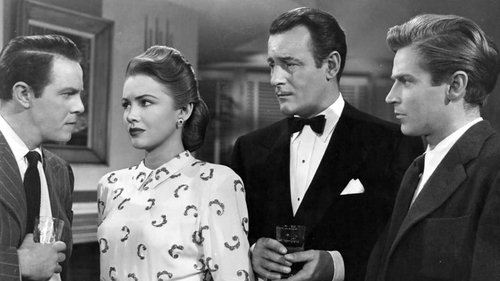




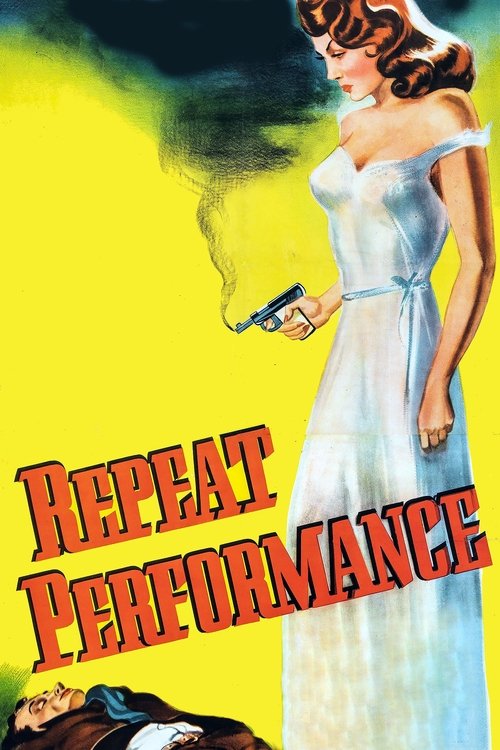
Repeat Performance was directed by Alfred Werker, with a screenplay adaptation by Walter Bullock based on a novel by William O’Farrell. The cast includes Louis Hayward, Joan Leslie, Tom Conway, Richard Basehart, Virginia Field, and Natalie Schafer; the film features music by George Antheil and cinematography by L. William O'Connell. The story begins on New Year's Eve in 1946, with Sheila Page standing over her husband’s body, a gun in her hand. Seeking comfort from friends at a party, she expresses a desire to undo the problems of the past year. Surprisingly, she is given that opportunity... Fate proves to be quite persistent. The narrative feels like something that would have been perfectly suited for The Twilight Zone later on—a fantastical story involving time travel, yet still bound by an inescapable sense of destiny. No matter what Sheila Page (Leslie) attempts, her year of hardship, and the difficulties faced by those around her, seem unavoidable. This creates several engaging scenes as viewers hope she can achieve what she sets out to do. The film aligns with noir conventions due to its pervasive pessimism, while the main characters—a flawed husband, a woman with dangerous allure, a frustrated poet—seem plucked directly from classic noir stories. It occasionally drifts into overly sentimental territory in the middle section, but avoids any excessive or unbelievable drama. The visuals are striking at times, particularly during the dramatically shadowy conclusion. There's also a memorable sequence where Sheila visits a friend in a mental institution; as they converse (in a darkly charged exchange), the reflection on the wall behind her shows a barred window with rain falling down—a powerful metaphor for discord and a clever detail. However, these strong visual moments leave you wanting more throughout the film, something director Werker would accomplish a year later with the excellent He Walked By Night (starring Basehart). George Antheil's musical score (from The Sniper and In A Lonely Place) is noteworthy, especially during that final scene as he interweaves strings and woodwinds with the sound of a ticking New Year’s Eve clock. The performances are solid; Leslie portrays her character believably as a woman confronting fate head-on, Hayward seems a bit too energetic but still effectively plays the role of her unpleasant, drunken husband, and Basehart, in his film debut, suggests even greater potential is ahead. There isn't a single weak performance—everyone contributes meaningfully to the whole. I learned that the novel has substantial differences from this adaptation, changes that would likely have resulted in a much darker noir experience. This explains why some fans of the book are disappointed with the film version. It’s clear the filmmakers were trying to appeal to a wide audience, resulting in a blend of noir and fantasy melodrama. Nevertheless, Alfred Werker's movie takes an intriguing concept and maintains viewer interest from its somber beginning to the excellent speech delivered by Basehart at the end. 7.5/10
On September 22, 2026
#30133▲ 15072
30133rd by Pulse movie online17.3PULSEPulse MeterOur daily Pulse Meter measures public activity and popularity signals across the web.How it works →