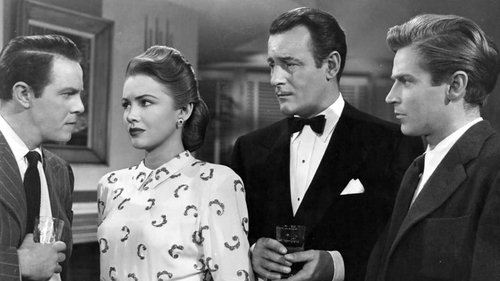




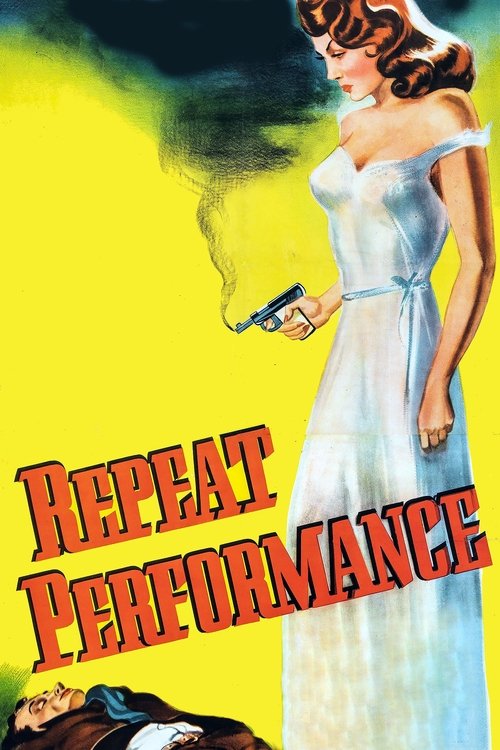
There’s a surprising connection between film noir and The Twilight Zone, as many actors who appeared on the CBS show were also familiar faces from 1940s B-movies. You can even spot classic noir touches like Dutch angles and striking black and white cinematography in some episodes – at least before the series switched to videotaping later on. A look at the credits reveals names often associated with film noir: Harry J. Wild, Joseph LaShelle, John Brahm, and Richard Florey, among others. Of course, the science fiction or fantasy elements are what set The Twilight Zone apart from traditional noirs. However, films like Val Lewton’s RKO horror movies and the New Year's Eve thriller *Repeat Performance* do blur those lines. *Repeat Performance*, released in 1947 by Eagle-Lion Films, was part of their attempt to become a major Hollywood studio. They produced films that weren’t quite cheap B-movies but also not expensive A-pictures – somewhere in between. The film definitely falls into that category. The movie starts with somewhat clumsy and overly dramatic opening credits before settling into a classic noir feel, though the overall production value is noticeably low. It features former stars like Louis Hayward and up-and-coming actors such as Richard Basehart in his first screen role. While *Repeat Performance* might be a little too melodramatic to be considered a top-tier noir, it’s enjoyable enough for fans of the genre. The striking opening and closing sequences really elevate the film, making it a worthwhile addition to the classic film noir era. Despite its flaws – it's primarily appreciated by those who enjoy old black-and-white mysteries -- it remains one of my favorite New Year’s Eve stories. The plot centers on Broadway actress Sheila Page (Joan Leslie), who shoots her husband Barney (Hayward) just before midnight on New Year's Eve, 1946. She then seeks out her friend, the eccentric poet William Williams (Basehart). After confessing her crime to William, he suggests they consult with Sheila’s producer, John Friday (Tom Conway). As they head to John’s apartment, Sheila expresses a wish that she could relive the past year and avoid making the same mistakes. Upon arriving at John's door, Sheila realizes William has vanished, leading her to suspect something is amiss. A narration explains what’s already apparent to the viewer: her appearance has changed, and she’s been transported back in time – exactly one year earlier. She now has a year to correct the events that led to her actions. This type of explanatory voiceover is common in film noir, but here it feels more like an introduction from *The Twilight Zone* than a typical noir narration delivered by someone like Humphrey Bogart. The story is based on a novel by William O'Farrell, who didn’t publish many other works; this was his first. Dan Stumpf at The Mystery File praised O'Farrell's writing ability: “O’Farrell can write. He can put across a bitchy theatrical milieu and a seedy flophouse with equal aplomb, evoke a desperate chase and a disparate seduction with commensurate suspense, and weave a tale of murder and melodrama (verging on Soap Opera at times, but teetering skillfully on the edge) with prose that keeps the pages turning very nicely.” There are significant differences between O'Farrell’s novel and the film version. In the book, it is Barney who travels back in time after shooting Sheila, who has already died by suicide. The novel also includes a scene where Barney, William, and Mary (a gay character in the book that Basehart subtly hinted at) are shot at by police, which leads to the supernatural events. This scene would have been perfect for inclusion in the film. While soapy, O'Farrell’s novel has a more satisfying conclusion than most thrillers. It's worth reading if you can find it. O'Farrell’s book gained considerable attention and was later adapted into a 1980s television movie, featuring Joan Leslie in a smaller role. The cast includes Louis Hayward, whose career had seen better days, but who made some interesting choices, including appearing alongside Edgar G. Ulmer in the noir drama *Ruthless*. In 1950, he starred in Fritz Lang’s *House by the River*, along with films like *Ladies in Retirement* and *And Then There Were None*. Tom Conway, a personal favorite, is also featured; besides roles in *Cat People* and *The Seventh Victim*, he played The Falcon in that long-running mystery series, taking over from his brother George Sanders who had grown tired of the part. Sanders himself replaced Hayward as The Saint in the movie series that likely inspired The Falcon. Joan Leslie, excellent in *High Sierra*, isn’t quite as strong as her co-stars here, but she handles a difficult role well given how outlandish the story becomes. Finally, Richard Basehart captures the essence of O'Farrell’s “William and Mary” character without being overly obvious. While many remember him for his roles in TV’s *Voyage to the Bottom of the Sea* and the 1984 Olympics voiceover, his contributions to film noir are substantial. The following year, Basehart would star in the memorable *He Walked by Night*, alongside other noir films like *Reign of Terror*, *Tension*, *Outside the Wall*, *Fourteen Hours*, *The House on Telegraph Hill*, and the British noir *The Good Die Young*. I recommend 1947's *Repeat Performance*. A second viewing is encouraged... in The Twilight Zone.
On September 22, 2026
#30133▲ 15072
30133rd by Pulse movie online17.3PULSEPulse MeterOur daily Pulse Meter measures public activity and popularity signals across the web.How it works →