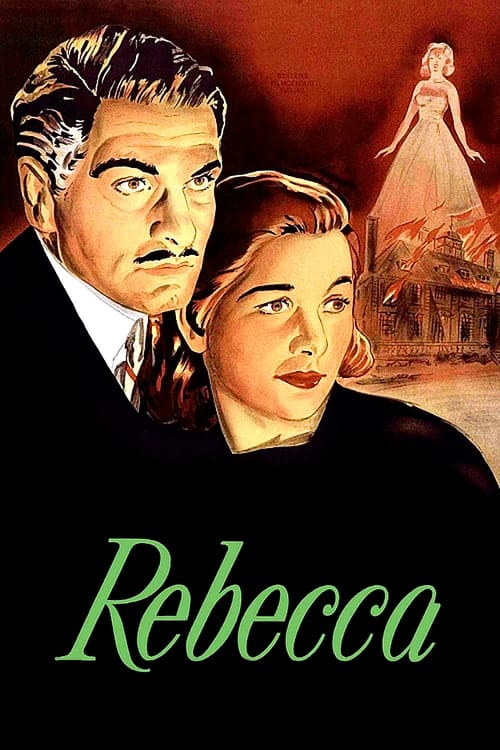




This is an exceptional Gothic Thriller that has inspired many similar works but few can match its quality. With "Rebecca" set to premiere on Broadway, I felt it was a good time to revisit what might be my favorite Hitchcock film. I remember vividly the first time I saw this decades ago, recorded on VHS during a late-night showing; I woke up just in time to catch part of it and ended up staying up all night. That’s how captivating the movie is. Daphne Du Maurier's story about an unassuming young woman who surprises her employer by marrying a wealthy widower is gripping, suspenseful, and full of subtle hints. Joan Fontaine delivers a beautiful performance as the awkward bride who leaves behind her overly emotional employer (Florence Bates) to marry the brooding Maxim De Winter (Laurence Olivier), only to face hostility from the darkly dressed Mrs. Danvers (Judith Anderson), who resents her presence due to her devotion to Maxim’s deceased wife, Rebecca. The mystery surrounding how Rebecca died and what kind of person she truly was is explored, with the involvement of the charming rogue George Sanders and some well-intentioned advice from Maxim's sister (Gladys Cooper). As a result, the new Mrs. De Winter—whose first name isn’t revealed—learns more than she expected. If you thought Olivier's Heathcliff in "Wuthering Heights" was gloomy and depressing, prepare yourself for his even more refined Maxim. Fontaine's bride is quite different from Merle Oberon's "wild and sweet" Cathy, but the two films make a perfect pairing when exploring tales of brooding men and their lost souls. Samuel Goldwyn and David Selznick were prominent independent film producers, so comparisons are often made between them; they shared many actors and, in this case, the same cinematographer (Gregg Toland). Fontaine and Olivier had good chemistry on screen, even though they apparently didn't have a close working relationship. However, it’s the supporting cast who truly shine. Anderson's Mrs. Danvers is a role that has been portrayed before (often by Gale Sondergaard), but there was considerable interest surrounding Anderson’s performance in her second film (and first in seven years) given her reputation as one of Broadway's leading dramatic actresses. Mrs. Danvers isn't simply an evil housekeeper; you understand her affection for the late Rebecca from the beginning, and every gesture she makes is mesmerizing. I can’t praise her enough. Sanders’ suave villain—who playfully addresses Mrs. Danvers as "Danny"—is incredibly likable and almost steals the show from the leads. Gladys Cooper and Nigel Bruce add a touch of British charm to their eccentric characters, while Florence Bates is hilariously funny in her brief appearances, casually extinguishing a cigarette in cold cream and coolly telling Fontaine that she can never truly be a “great lady.” Every scene feels like a classic movie memory, from the opening narration to Fontaine’s first glimpse of De Winter, and then, the rainy drive down to where she sees Mandalay for the first time. The initial brightness dims when Anderson appears as Mrs. Danvers. A chilling pause, followed by "How Do You Do," establishes the tension, setting the stage for everything that follows. Anderson is remarkable in two scenes—when she finds Fontaine hiding in Rebecca’s room and later, when Fontaine confronts her after uncovering her deception. The film does slow down a little during the discovery of what might be Rebecca's body, but this is a minor flaw. C. Aubrey Smith is memorable in his brief role as Maxim's lawyer. The final image will remain with you, just as Mandalay lingered in the mind of the second Mrs. De Winter. Although "Rebecca" won Best Film at that year’s Academy Awards, some film historians consider “The Grapes of Wrath” to be the superior film. I find the two films very close in quality, and also disagree with the choice of Jane Darwell for Supporting Actress over Anderson's Mrs. Danvers. It was a significant oversight not to nominate Sanders. A BBC adaptation years later is also quite good; it’s more faithful to the novel and features Diana Rigg as a more approachable Mrs. Danvers and a very flamboyant performance by Faye Dunaway in the role of Florence Bates.
On September 27, 2026
#2890▼ 1780
2890th by Pulse movie online48.0PULSEPulse MeterOur daily Pulse Meter measures public activity and popularity signals across the web.How it works →