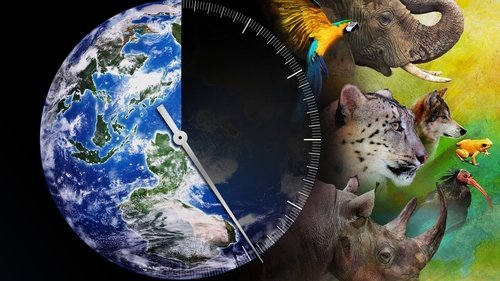





The survival of any living thing depends on a favorable environment, and finding that place can take countless generations. Their purpose is simply to restore balance within nature as quickly as possible because they move between locations, facilitating connections between elements that wouldn't otherwise occur, triggering reactions in the process. When the equilibrium between natural components and life is disrupted, extinction follows. The Earth has already experienced five major extinction events, and now stands on the brink of a sixth, largely due to human actions. While no one can challenge humanity’s dominance, scientists and environmentalists are doing so. This documentary explores this specific issue, examining its underlying causes. Following in the footsteps of his Academy Award-winning film 'The Cove', the director once again turns his attention to marine species threatened by overhunting. The focus has shifted from Japan's dolphin hunts to addressing misguided beliefs within China that endanger animals like tigers, rhinos, and other marine life. The Oceanic Preservation Society accompanied researchers to trace the origins of this problem, concentrating on shark fin and manta ray gill trade markets. This led the film crew to Indonesia, where a small coastal village is a significant supplier for Chinese consumers. > "We have this illusion that it's the big things in the environment that count. But if you lose the small things... Everything else fails." The sheer size of China’s population means their beliefs can have a far-reaching impact. As China’s middle class grows, they are able to satisfy demands for products from around the world, which puts immense pressure on biodiverse regions like India, Africa, and Indonesia due to poaching and other illegal activities. What is needed is better scientific education to correct these misconceptions. Integrating Chinese immigrants into broader global society, rather than isolating them within self-contained communities, would also help. I'm not criticizing China; their beliefs are simply alarming given the scale of their population – they exert an influence five to ten times greater than that of other regions. While today’s problems stem from China, tomorrow it could be India or the United States, followed by Europe and Africa. It is no longer solely the responsibility of world leaders; every individual must take action, as even small contributions are significant. The recent Paris climate conference only managed to slow down resource depletion slightly, but similar agreements are needed in other areas too. Civilization arose when humans realized they no longer fit within the natural habitat and abandoned it, creating their own existence alongside other species through farming. What’s often overlooked is that these agricultural practices continue to contribute to planetary changes. Furthermore, overpopulation exacerbates the problem; there are more consumers than farmers and farm products, forcing us back into the wild to hunt, which seriously disrupts the biological and chemical balance of the world. > "So, this is really the last line of defense, keeping animals that are extinct in the wild in a captive situation." Goats, sheep, and chickens haven't gone extinct under human care because their numbers have consistently exceeded those of any other species throughout history, including humans. Breeding and slaughtering them without impacting natural wildlife has been possible until now. The point is that these animals depend on plants, and if plants disappear, the oxygen supply will be cut off, leading to another mass extinction event. A balance must be struck, achievable by diversifying our diets between meat and plant-based foods; reduced demand would then initiate restoration. This "automatic" process lies in the hands of humanity. That’s essentially what this film conveys. While the filmmakers intended to focus on marine life, the discussion expanded to encompass numerous other related topics, revealing causes and potential solutions. Unlike the director's previous work, it didn’t maintain a singular focus but instead explored various subjects. At times, the narrative strayed and began promoting trendy products – a common tactic for capturing attention in today's digital world. Despite my reservations, I was deeply moved by the film and shed tears on several occasions. It may not be a masterpiece; it didn’t receive an Oscar nomination beyond original song recognition—but its passionate advocacy is commendable. I have recently stopped visiting zoos, which I consider prisons for animals that have committed no crimes. However, given the current global situation, captive breeding appears to be the last resort. If there were another world where people were more aware of their natural surroundings, I would eagerly seek it out. But Earth is all we have, and we are failing to care for it; when the time comes to flee, there will be nowhere to go. Recent reports about pollution in Chinese cities echo scenes from films like 'The Mist' and 'The Road,' suggesting that an apocalypse isn’t far off. As this film suggests, it is not too late to join forces for good. 10/10
On September 24, 2026
#66352▼ 3529
66352nd by Pulse movie online7.7PULSEPulse MeterOur daily Pulse Meter measures public activity and popularity signals across the web.How it works →