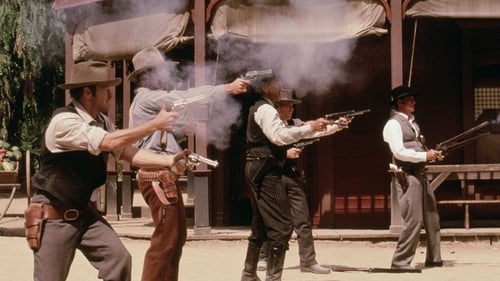




Uli Edel directed “Purgatory,” which first appeared on television in 1999, and it tells the story of events around 1888 when Blackjack Britton’s gang (led by Eric Roberts) takes refuge in a secluded town called Refuge. The residents there seem unusually kind and peaceful, but greenhorn Sonny (Brad Rowe) becomes increasingly suspicious that something is amiss. Sam Shepard portrays the Sheriff, Donnie Wahlberg his deputy, Randy Quaid the doctor, and JD Souther a shop-owner. Amelia Heinle and Shannon Kenny also appear. Aside from an action-packed beginning, this film largely takes place within the confines of the town. While it’s clear that it was made for television, the movie stands out due to its intriguing concept and solid writing. There are fantastical elements reminiscent of “Pale Rider” (1985) and “High Plains Drifter” (1973). In my opinion, this film is comparable to the former and better than the latter because of a more compelling narrative and substantial underlying themes. The movie has a running time of 1 hour, 34 minutes and was filmed in Barstow and Burbank Studios, California. Gordon T. Dawson wrote it. GRADE: B ***SPOILER ALERT*** (Do not continue reading if you haven’t seen the film). Some viewers seem to have missed the point of the movie's premise. Refuge isn't simply a place for outlaws; it serves as a “last chance” for people who are only marginally good, as stated in the film—individuals who were essentially taken from among the truly wicked. As such, the townspeople (not visitors) have different lives and jobs than they did before. For example, Billy the Kid is now Deputy Glen instead of a gunfighter, and Dolly Sloan is Ivy rather than a prostitute or advocate for women’s rights. Holliday is now Doc Woods, a medical doctor—he's not thin because he no longer has tuberculosis. Similarly, Jesse James became a shop owner named Brooks and no longer robs trains. Some believe that James deserved immediate punishment since he was known for robbing banks and trains, but the movie suggests his actions were influenced by the Civil War and the violent guerrilla warfare in Missouri/Kansas during his formative years, which is why he’s given this “last chance” in Refuge. Regarding a questionable timeline, Holliday may have been a relatively recent arrival, so the reference to "10 years" concerning Hickok's death might actually mean "approximately 10 years." This means that the events could be occurring in 1888 or even 1889. The film implies that Sonny was familiar with famous Western figures and therefore recognized hints about their true identities. He only suspected who they really were, and this suspicion was later confirmed as he learned more about Refuge’s supernatural nature. It wasn't a case of him instantly recognizing these people and being completely certain of their notorious pasts based on cheap novels. Finally, some viewers have criticized the movie for seeming to suggest that shooting people can lead to eternal life. However, it actually promotes selfless courage and dedication to justice: Blackjack and his gang demonstrated they were habitual criminals and a danger to others; taking a violent stand against them was the only solution because they couldn’t be reformed. The best way to stop someone with a gun is with another person who is brave enough to use one as well.
On September 23, 2026
#15442▼ 2690
15442nd by Pulse movie online29.1PULSEPulse MeterOur daily Pulse Meter measures public activity and popularity signals across the web.How it works →














