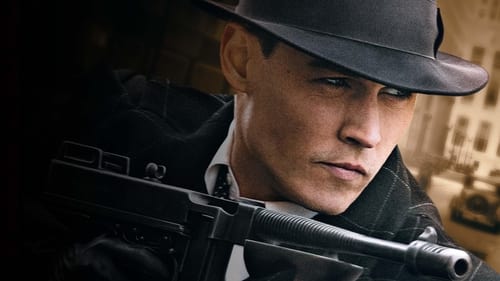




Dillinger is a well-made film about an iconic bandit. There’s no shortage of quality movies focusing on Prohibition and the significant criminals from that period in American history—Al Capone, Bugsy Siegel, among others—which have created something like a “golden age” for organized crime. John Dillinger holds a prominent position within this era's notorious figures. Following a troubled youth marked by rebellious behavior, Dillinger deserted the Navy and received an unusually harsh sentence of nearly twenty years in prison after robbing a grocery store. This punishment left him feeling resentful. He then used his time at Indiana State Penitentiary to learn about crime until his release in 1933. After regaining his freedom, he assembled his first gang and began committing bank robberies that brought him fame. In 1934, he was arrested in Arizona and transferred to Crown Point, Indiana, from where he orchestrated a remarkable escape using a fake pistol crafted from soap or wood. His escape, the notoriety he had already gained, and the interstate nature of his crimes led to the involvement of the newly established FBI. Dillinger subsequently formed another group of criminals, including the equally well-known “Baby-Face” Nelson, and resumed his robberies while attempting to evade law enforcement. Months later, after several near misses with capture, he was betrayed, denounced, and killed outside a movie theater. The film is quite good. It remains largely faithful to actual events and Dillinger’s life, though it rearranges the sequence of some occurrences to build dramatic tension—for example, “Pretty Boy” Floyd's death appears earlier than it actually happened, months later in a cornfield. The filmmakers also take certain liberties with reality. However, I am willing to overlook these changes because the film is presented as fiction and generally shows respect for historical accuracy. I find the explanatory narration less acceptable: those unfamiliar with Dillinger’s story may struggle to follow what's happening on screen. This likely contributed to the film’s lack of success outside the United States, where John Dillinger isn't widely known. Michael Mann is a skilled director, demonstrating thoroughness and respect for history—qualities we’ve seen in films like “Last of the Mohicans” and “Collateral.” He does an excellent job here, effectively portraying the criminal’s life and his methods for evading the police. The cinematography is striking, making exceptional use of light and color, particularly during nighttime scenes. Furthermore, the locations, props, vehicles, costumes, and sets are all convincing and realistic. For me, the film's biggest weakness is its detached approach to everything. Given that the protagonist is an outlaw who committed unacceptable acts, it would have been a plus if I had found myself sympathizing with him. What struck me most was how blurred the line appeared between law enforcement officials and the criminals they pursued; Dillinger wasn’t held for trial but executed in public, surrounded by hundreds of people potentially at risk. Who is the hero or villain? The distinction isn't clear, both in the film and in real life. I can only comment on the cast, which is led with confidence by Johnny Depp, an actor known for his ability to portray complex and unusual characters, who delivers a very capable performance. Christian Bale, another talented performer suited to impactful roles, played the federal agent tasked with apprehending Dillinger, and he is outstanding in his portrayal. Marion Cotillard does her best in the role of Dillinger’s girlfriend, but truthfully, the film didn't need any romantic subplot, even though that character was necessary for understanding the criminal’s personal life, so she doesn’t add much to the overall experience. Other notable cast members include Stephen Graham, David Wenham, and James Russo.
On September 24, 2026
#1750▼ 27
1750th by Pulse movie online52.5PULSEPulse MeterOur daily Pulse Meter measures public activity and popularity signals across the web.How it works →














