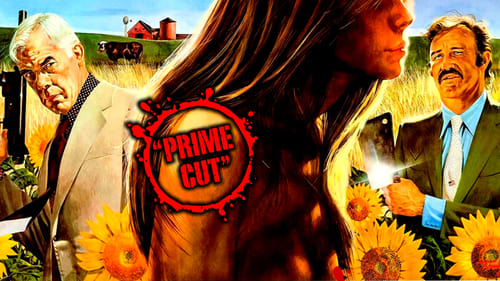




Let's discuss a film that really stood out when it was released. Prime Cut. Featuring Lee Marvin, Gene Hackman, and Sissy Spacek, this 1972 movie is eighty-eight minutes of strange, pulpy entertainment – blending exploitation elements with a tough, crime story. Michael Ritchie directed Prime Cut; he didn’t have many other significant credits (though The Candidate, also from 1972, might be an exception), and the screenplay was written by another lesser-known name, Robert Dillon. Marvin portrays Nick Devlin, a hardened enforcer sent to Kansas City to recover half a million dollars that a slaughterhouse kingpin named Mary Ann (Hackman) owes to the Chicago mob. After driving all night, Devlin and his men arrive at Mary Ann’s ranch during a livestock auction. The slaughterhouse operates as both a legitimate business and a front for human trafficking. Well-dressed men wander around inside a large barn, bidding on drugged, naked women – Mary Ann's 'livestock,' who have been taken from orphanages and bus stops. One of the girls, Poppy (Spacek), manages to ask for help while under the influence of drugs. Marvin takes her along and secures Mary Ann’s agreement to hand over the money the following day. What happens next isn't really that important, given how strange and surreal the story is and how much remains unexplained. The film doesn’t attempt to explain how Mary Ann accumulated such a large debt or the origins of the obvious animosity between him and Devlin. The same goes for the backstory of the relationship between Devlin and Mary Ann's glamorous, blonde wife, Clarabelle (Angel Tompkins). Eventually, the money exchange falls apart, forcing Devlin to systematically dismantle Mary Ann’s operation. This isn’t unusual in itself, but there are some truly remarkable touches and themes throughout. 1. The opening credits The opening sequence shows cattle being brought to a slaughterhouse, slaughtered, and turned into sausages. Lalo Schifrin composed the score, using elevator music layered with the sound of a meat saw cutting through bone. It's quite unsettling, especially when a muscular man (‘Weenie,’ Mary Ann’s brother) interrupts the sausage-making process to dispose of some debt collectors sent by the mob – turning them into sausages and mailing them back to Chicago. 2. Marvin This isn’t necessarily Lee Marvin’s finest performance (Point Blank or The Dirty Dozen would be better examples). It almost feels like he's going through the motions, but it doesn't matter. From his first appearance, drinking in a Chicago bar and eyeing the mob boss’s girlfriend, he embodies classic Marvin – a mix of quiet toughness and dry wit. 3. Spacek Prime Cut marked Sissy Spacek’s debut on screen, and her performance ranges from innocent ingenue to vengeful figure. In one of the film's most memorable scenes, she accompanies Devlin to dinner at Kansas City’s finest restaurant, wearing only a sheer green dress. As the city’s elite look on, she tells Devlin about how she ended up as Mary Ann’s captive. Despite the subject matter, it’s a strangely detached scene; their relationship feels more like father and daughter than anything else. 4. The combine harvester chase After the money exchange goes wrong, Devlin and Poppy are forced to flee across a vast wheat field, pursued by one of Mary Ann's men in a giant combine harvester. If you’ve ever wondered who would win between a combine harvester and a speeding car, this is your chance to find out. 5. American gothic Kansas is portrayed as a twisted version of American Gothic – a corrupt kingdom dominated by Mary Ann and his army of blond-haired young men dressed in matching denim overalls, armed with shotguns. The film showcases country fairs and expansive fields of wheat and sunflowers, along with some striking locations around early seventies Kansas City, including a halfway house for the homeless. Fresh off The French Connection the previous year, Hackman plays Mary Ann with a sense of playful malice, like a crooked politician promoting the virtues of rural America. Between bites of offal, he tells Devlin, “Chicago is crumbling. Nothing left there but kids and old men. What hasn’t been burned down has been picked over.” Devlin and his men show no sensitivity to the bizarre rural setting or their status as outsiders. Devlin smokes cigars, wears a grey suit and white shoes, while his men are dressed in black. They ride around in a large black Cadillac and stay at the best hotel in town. I couldn’t help but draw parallels with the Vietnam War, which was ongoing at the time. Marvin and his men resemble an occupying force, compensating for their visibility with superior firepower. Unlike many of the films I review, Prime Cut is readily accessible and doesn't cost a fortune. Don’t delay any longer; get it and enjoy one of the most unusual crime movies from the early seventies.
On September 24, 2026
#16759▼ 1545
16759th by Pulse movie online27.5PULSEPulse MeterOur daily Pulse Meter measures public activity and popularity signals across the web.How it works →