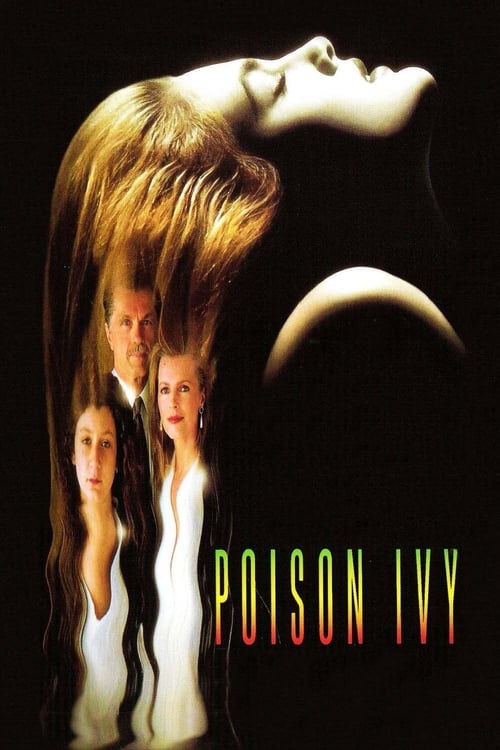




1992’s “Poison Ivy,” starring Drew Barrymore, centers on a plot familiar from other films—an alluring figure insinuates herself into a family by charming the children and captivating the husband. This setup recalls movies like "The Babysitter" (1980) and "Summer Girl" (1983), both made for television and accessible online. In “Poison Ivy,” Barrymore portrays Ivy, a friend of the awkward Sylvie (Sara Gilbert). Tom Skerritt plays the detached husband, while Cheryl Ladd embodies the fading but still attractive mother. “Poison Ivy” distinguishes itself with its heightened visual style and superior technical quality, likely owing to a larger budget than its predecessors. A particular strength is the film’s score, which manages to be haunting, romantic, melancholic, and beautiful all at once. There's an undercurrent of sadness throughout the story because the family, despite their immense wealth—they reside in a mansion overlooking Los Angeles—lacks spiritual fulfillment. It serves as a reminder that money and possessions can’t guarantee happiness or love. Drew Barrymore was nearly 17 during filming and delivers a convincing performance as the seductive character. This is part of why some dismiss the film as exploitative trash, viewing it simply as a dangerous Lolita narrative with a polished exterior. However, it succeeds within its own framework; not every movie needs to be “Gandhi.” Furthermore, films like "Poison Ivy" offer more than just cheap thrills—they explore themes of female power, specifically the influence wielded by young and attractive women. Ivy’s character comes from a difficult background but recognizes her ability to manipulate situations and seems to revel in it. I recall an experience with a church where the pastor's granddaughter, then aged 17 to 22, possessed a degree of power despite not matching Drew Barrymore’s beauty. She would spread lies and rumors, which some people readily believed because of her connection to the pastor. She began dating a relative of mine who was 19 years older, and it became clear that her interest was primarily financial. Eventually, she obtained his credit card information and spent over $17,000 on purchases without his knowledge. Her attempts to move in with him were thwarted by his mother, who suspected the young woman might try to harm her to gain access. It was also discovered that she had attempted to secure life insurance on him, a highly unusual action. The implications are open to interpretation. My point is that these manipulative women—young schemers who use their looks to seize control and disrupt lives—do exist. Regardless of whether it’s considered exploitative, this kind of story provides compelling material for a movie, especially when presented with style, as in “Poison Ivy.” The film runs briefly at 88 minutes, while the unrated version is slightly longer, clocking in at 93 minutes. GRADE: B+
On September 30, 2026
#2686▼ 263
2686th by Pulse movie online11.1PULSEPulse MeterOur daily Pulse Meter measures public activity and popularity signals across the web.How it works →