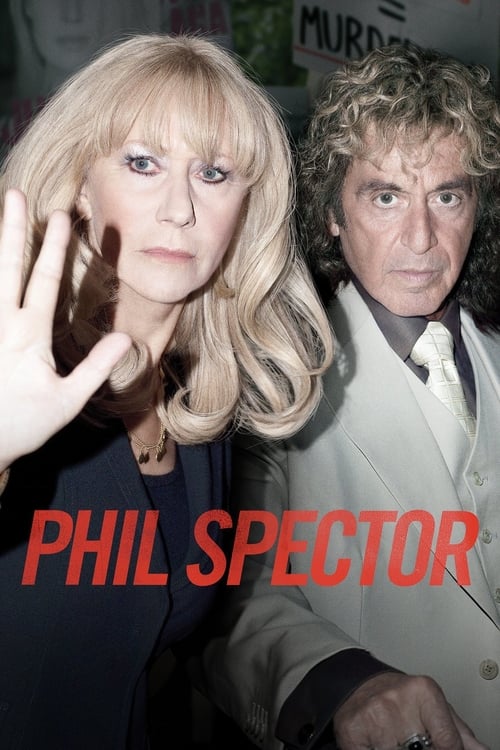





The film begins with a disclaimer from Phil Spector stating that it’s a fictionalized work inspired by real people involved in a trial but not an attempt to portray them or comment on the proceedings. This immediately brings up some questions. For instance, if the intention wasn't to represent actual individuals, why are the characters named after the real people they're supposedly based on? It seems strange that this is a movie about a record producer accused of murder called Phil Spector, but it insists it isn’t *about* the actual Phil Spector who faced those charges. Also, the fictional Phil Spector stands accused of murdering actress Lana Clarkson, just as the real person did; so how can the film claim to be unrelated to a true story? And if there's no intention to offer commentary on the trial or its result, what’s the purpose of making it at all? It should have been either presented as an allegory or a documentary—to borrow from John the Revelator, something definitively hot or cold because I can’t abide anything lukewarm—but instead, it exists in some undefined space between those two categories. What the movie actually is contradicts what it claims to be; behind its pretense of objectivity lies a deeply subjective perspective bordering on hero worship. According to writer/director David Mamet, Spector (played by Al Pacino) was simply a "beloved eccentric" who was condemned not by the evidence—which the film suggests was lacking—but by public opinion and an inadequate legal defense. This is peculiar, considering that Linda Kenney Baden (Helen Mirren), his attorney, served as a consultant on the project; apparently, she was so taken with Spector and saddened by his situation that she overlooked crucial aspects of the prosecution's case while advising Mamet—the very evidence supporting his innocence, according to the film. However, this revisionism isn’t limited to Spector; it extends to Baden as well. For example, the fictional Baden states she won’t “attack the girl,” meaning Clarkson, in her defense. In reality, the defense team did attack Clarkson's character during the trial, even presenting a video of her in blackface imitating Little Richard—something that the fictional Baden refuses to do. Moreover, Baden-Mirren seems to possess some kind of foresight; early on, she predicts that because "they let O.J." go free, Spector will face consequences, stating, “He will be tried for the murder of O.J.’s wife and he will be found guilty”—and if that isn’t a comment on the trial or its outcome, I don't know what is. Considering everything, it’s ironic when the movie asserts that "the prosecution has nothing except everyone's conviction that [Spector] is guilty"; actually, Mamet lacks anything other than his own belief in Spector’s innocence. Ultimately, Phil Spector doesn’t amount to much beyond a reminder that “even Homer nods.” David Mamet created some of the best films of the '90s and mid-2000s, and even his weaker work couldn't be accused of dishonesty or malice. But this film makes it clear that this should have been called The Devil’s Advocate.
On September 25, 2026
#17261▲ 11801
17261st by Pulse movie online25.9PULSEPulse MeterOur daily Pulse Meter measures public activity and popularity signals across the web.How it works →