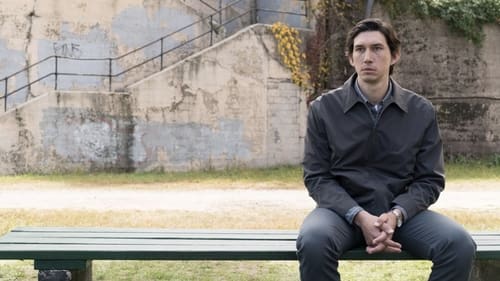





Jim Jarmusch’s 2016 movie PATERSON explores the rhythms of daily existence in a small American city. The film's name references Paterson, New Jersey, a town not widely known outside the United States but notable as the birthplace of several prominent Americans and memorialized in an extensive poem by William Carlos Williams. It also happens to be the surname of the main character, a man in his thirties who works as a bus driver, portrayed by Adam Driver. The film follows one week in Paterson’s life, with each day unfolding similarly: he wakes up, shares a kiss with his wife (played by Golshifteh Farahani), goes to work driving passengers, returns home, has dinner with his wife, walks the dog, and enjoys a beer at a local bar. However, Paterson also pursues an unusual pastime; during his lunch breaks, he writes poetry, filling a notebook of poems that his wife praises but which he keeps private. There is some development in PATERSON, a rise in tension and a sudden event, but generally Jarmusch isn't aiming for complex storytelling. Instead, he intends to capture the quiet essence of an ordinary person’s life—or rather, two people’s lives, as the film portrays a marriage with empathy. Their relationship is straightforward and based on trust and understanding. Paterson seems very lucky to have this, as events around him suggest. (The script was written by Sara Driver, Jarmusch's longtime partner, and some might interpret it as an ode to their own special bond.) Some viewers will likely find this touching, while others in difficult marriages may feel envious of the harmony between Paterson and his wife. Those familiar with Jarmusch’s previous films know that he often shows urban decay on screen—abandoned lots filled with weeds, walls covered in graffiti. Previously, these scenes were meant to contrast with Hollywood's typical portrayal of America as glamorous, and to highlight the artistic nature of his characters. However, this element is noticeably absent here. Paterson, New Jersey is presented instead as a clean and relatively prosperous town. The residents, regardless of their background or ethnicity, appear content. Throughout the film, Jarmusch depicts interactions between different groups—white people and African Americans, gay individuals and heterosexuals—as if celebrating a modern era where old divisions have disappeared. This marks the most hopeful film Jarmusch has ever made, but this idealized vision feels somewhat unsubtle, and he seems to be ignoring significant social problems that continue to affect many people. While watching, I felt compelled to point out that this gentrified setting isn’t representative of all of America, just a small number of privileged individuals. Despite the film's shortcomings, the portrayal of married life and how poetry is incorporated into the story are quite moving, and I believe it’s worth seeing, particularly for those who appreciate Jarmusch’s work or enjoy independent films.
On September 23, 2026
#6744▼ 854
6744th by Pulse movie online42.9PULSEPulse MeterOur daily Pulse Meter measures public activity and popularity signals across the web.How it works →