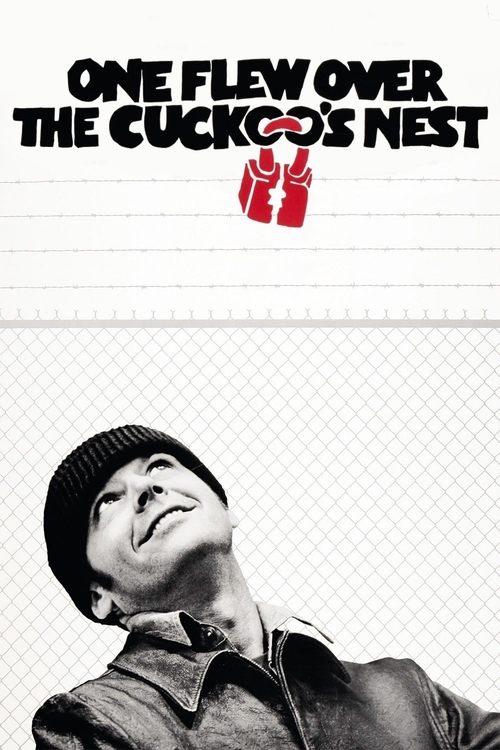




Set in the early 1960s, the story centers on R.P. McMurphy (Jack Nicholson) and his arrival at a mental institution in Salem, Oregon—the very location where the film was shot. He attempts to evade prison time by claiming mental illness, believing it will be easy, but quickly discovers he’s mistaken. The hospital seems orderly, and Nurse Ratched (Louise Fletcher) appears to be a kind caretaker of McMurphy's ward, though there are disturbing elements hidden beneath the surface. "One Flew Over the Cuckoo's Nest" (1975) is a film whose value deepens with age. I watched it when I was younger and, while I found it enjoyable, I didn’t fully grasp the underlying ideas that the movie conveys. The film offers criticism of how institutions handle mental illness. Their therapeutic methods are ineffective and only make patients reliant on the institution, which perpetuates its own existence (often at public expense). McMurphy poses a threat to this system and must be neutralized. Many viewers suggest Nurse Ratched isn't truly bad or that she was simply doing her job; I initially shared that perspective. This reveals an aspect of the film’s brilliance: Ratched’s malevolence is so subtle that the filmmakers allow for possible misinterpretation. She appears to do a good job administratively, maintaining authority without being overtly cruel, and showing concern for patients as long as they adhere to regulations. However, she functions as a robotic extension of a dehumanizing system, keeping the residents in a state of apathy and marginalization; their dignity is stripped away because the institution views them as less than human. The filmmakers and Fletcher (along with Ken Kesey, the author of the book) made Nurse Ratched a more compelling antagonist by exercising restraint. This contrasts sharply with Faye Dunaway’s exaggerated portrayal of Joan Crawford in "Mommie Dearest." Ratched isn't an obvious villain; instead, she uses rules to dominate the men and reduce them to a childlike state of dependence and obedience. Her most significant accomplishment is Billy Bibbit (Brad Dourif). Despite his flaws, McMurphy serves as the story’s protagonist. While he’s impulsive and has a weakness for women—the very reason he ended up in prison—he embodies freedom and vitality. What he needs to learn is wisdom; then he can experience true freedom without causing harm to himself or others. Nurse Ratched, conversely, represents legalism: an authoritarian mindset fixated on rules and regulations. This is clearly illustrated during the World Series sequence: even with McMurphy securing the necessary votes for his ward to watch the game, Ratched denies it based on a technicality. When McMurphy then pretends to watch the game and stirs up excitement among the men, Ratched reacts with disapproval. Legalism stands in opposition to freedom, joy, and life. It’s about maintaining appearances and strictly adhering to rules. The problem is that appearances don't reflect inner truth, and strict adherence "kills." Despite his errors and shortcomings, McMurphy achieves more good for the men in his ward than Ratched or the institution ever could. How? Not only because he embodies freedom and vitality, but also because he loves deeply—but only those who deserve it: the humble, not arrogant abusers. When you cast aside restraint and love wholeheartedly, you’ll receive love in return, provided the recipient is worthy. A particular character embraces McMurphy at the film's conclusion out of affection; McMurphy freed him from mental illness and the institution that perpetuates its own existence by pretending to care and heal (though there are undoubtedly good people working within such institutions). No discussion of this film would be complete without mentioning “Chief” Bromden, portrayed effectively by Will Sampson. The movie runs for 2 hours and 13 minutes. GRADE: A
On October 2, 2026
#1057▲ 10
1057th by Pulse movie online8.1PULSEPulse MeterOur daily Pulse Meter measures public activity and popularity signals across the web.How it works →














