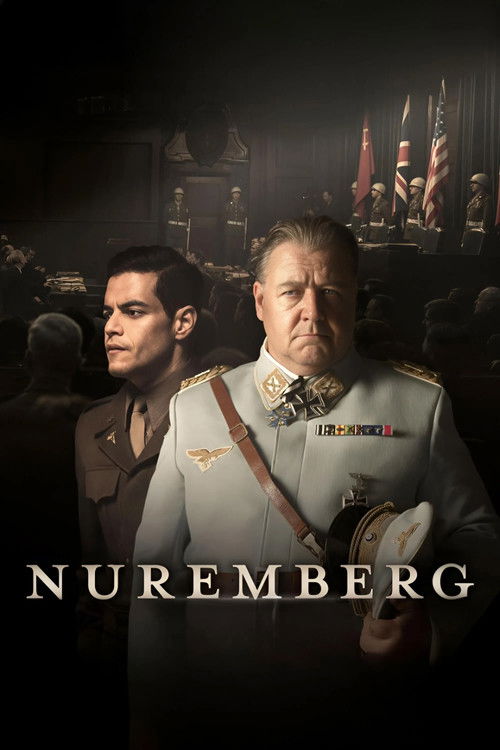





The film avoids trying to recreate the acclaimed 1961 "Judgement at Nuremberg," instead centering on events leading up to it. The story follows the Allied judiciary as they attempt to understand the mindset of Hermann Göring, portrayed by Russell Crowe, who is recently imprisoned. To achieve this, the Americans enlist psychiatrist Douglas Kelley (Rami Malek), whose therapeutic approach is quite unconventional. He recognizes that Göring is intelligent, refined, and not easily swayed, but to provide the character analysis desired for public consumption, Kelley must carefully earn his trust. This concern arises from a fundamental question: do the Allies have the right to judge anyone? International law didn't exist in 1946. How could Americans or Britons retroactively evaluate the actions of German citizens within their own country when those actions stemmed directly from a democratic election? Therefore, it’s vital that Kelley offers definitive proof demonstrating Göring and his associates were actively involved in the Holocaust. Set against the backdrop of a devastated nation and with war-weary occupying forces already facing some degree of mistrust, reaching an agreement with the Soviets was also essential. However, on a broader international level, the film falls short somewhat; it’s heavily dominated by the American perspective through Supreme Court Justice Robert Jackson (Michael Shannon), with support from Briton Sir David Maxwell-Fyfe (Richard E. Grant). The French and Soviet jurists are notably absent. This is disappointing, but it doesn't significantly detract from the concentrated focus on the evolving, intricate relationship between Kelley and Göring—and both Malek and Crowe deliver compelling performances as their intellectual game of wits unfolds. Leo Woodall’s role as Sgt. Howie Triest proves important at times, particularly towards the end, and he handles it competently, as does Tom Keune's portrayal of Robert Ley, which itself reveals something about the true nature of a Nazi high command lacking in humanity, decency, and often courage. Given that the story is rooted in historical events, writer James Vanderbilt had limited flexibility as the plot progressed, but this remains an effective exploration of the psychology surrounding peace and the challenges of distinguishing between justice and retribution. The film is skillfully made, but it’s the actual newsreel footage from the camps that lingers most powerfully—it’s deeply upsetting and undermines any potential empathy one might feel for Crowe's unsettlingly charming depiction of a ruthless man in a suit.
On September 28, 2026
#28962▼ 601
28962nd by Pulse movie online18.1PULSEPulse MeterOur daily Pulse Meter measures public activity and popularity signals across the web.How it works →