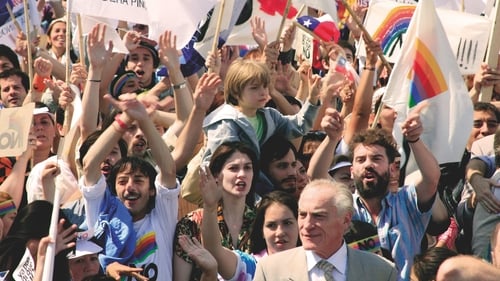




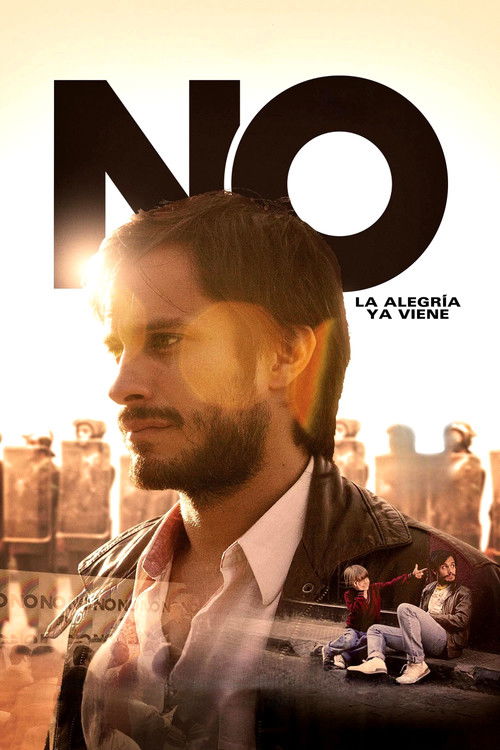
As Augusto Pinochet's fifteen years in power neared a critical juncture, international pressure forced him to schedule a vote on whether he could remain in control of Chile for another eight years. Despite the government’s supporters anticipating an easy victory with backing from the political and media landscape, they failed to account for the innovative strategies employed by the “no” campaign, spearheaded by "René Saavedra" (Gael García Bernal). While accustomed to creating advertisements for soft drinks, his agency found itself assigned a difficult task: challenging the government. He joined forces with the limited opposition available and developed a campaign that caused considerable internal disruption. Rather than directly condemning the generals or listing their atrocities as shocking figures, he cleverly reframed the message by highlighting the benefits of a free society and the “happiness” that would follow if citizens embraced freedom, liberty, and democracy. Constant threats loomed over his home due to the presence of the army and police, creating apprehension for his colleagues, his young son "Simón" (Pascal Montero), and his ex-wife "Verónica" (Antonia Zegers)—herself a courageous activist willing to endure violence from the authorities. Given only fifteen minutes of airtime daily, with their broadcasts frequently restricted or leaked to Pinochet’s supporters, it seemed unlikely that their optimistic approach would resonate. If you're seeking an in-depth documentary about the downfall of this regime or a serious examination of Pinochet and his government, you might be let down. This film adopts a more personal focus on one individual who outmaneuvered the system by devising a new method. Bernal’s “Saavedra” isn’t portrayed as exceptionally brave or inherently revolutionary; he's a family man with a stable job who previously had little involvement in the military’s actions. Initially, it might seem like he is simply performing his work with the same enthusiasm one would apply to promoting a snack food. However, as violence escalates and his commitment deepens, Pablo Larraín ensures that his character's investment grows accordingly. The film effectively reveals the extent of surveillance and intimidation by integrating archival footage of actual riots, police brutality in the streets, and occasional appearances of Pinochet—all contributing to the dramatic narrative. These documentary elements powerfully support the more theatrical aspects, and while Bernal might not have been my immediate choice for the role, he convincingly portrays a character embodying the fear and opportunity conveyed through the newsreel-style presentation. This isn’t a complete account of those tumultuous days, but it offers a believable glimpse into one crucial element of that precarious situation.
On September 22, 2026
#14471▲ 1147
14471st by Pulse movie online30.3PULSEPulse MeterOur daily Pulse Meter measures public activity and popularity signals across the web.How it works →