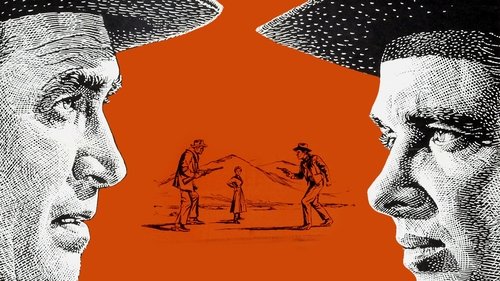




As many people familiar with Western films are aware, Night Passage was initially planned as the sixth collaboration between director Anthony Mann and actor James Stewart. Following a series of successful and influential "adult" Westerns, another pairing seemed very appealing to enthusiasts of the genre. The anticipation was heightened by the involvement of other talented individuals in the project. Borden Chase (Red River/Winchester '73) penned the screenplay; William H. Daniels (The Far Country) served as cinematographer; Dimitri Tiomkin (High Noon/Giant) composed the score, and the cast included Audie Murphy, Dan Duryea, Jay C. Flippen, Jack Elam, and Brandon De Wilde, who was known for his role in Shane. That’s a very impressive list of names associated with Westerns. Unfortunately, Mann withdrew from the project at the last minute, though the reasons given vary depending on the source. It's believed that Mann felt Chase's screenplay lacked impact, an opinion reportedly shared by Stewart himself. The casting of Murphy was also supposedly a point of disagreement for the director, although it may have simply been due to scheduling conflicts (he had both The Tin Star & Men in War released in 1957). Regardless, Mann’s departure meant the film would likely not reach its full potential, and sadly, Mann and Stewart never worked together again as a result. James Neilson, a television director, stepped in to finish the film, which was then released with mixed results at the box office. Even now, the movie remains quite controversial among Western fans, largely because of the lingering sense that it could have been much better had Mann remained involved. Night Passage is an acceptable genre film, but the plot is rather simple and the story lacks the depth that Mann likely would have brought to it. The narrative follows a familiar storyline about two brothers (Stewart/Murphy), one good and one bad. Chase’s screenplay offers no surprises; in truth, the writing is somewhat disappointing, especially because the central relationship between the brothers doesn't possess much emotional resonance. However, there are enough visual elements to compensate for the predictable plot and make it an enjoyable experience. Filmed using Technicolor’s short-lived "Technirama" process, the widescreen visuals really shine once the scenes move beyond the studio lot and into the mountains of Colorado. Trains take center stage in this film, as Chase adapted from a story by Norman A. Fox; the train becomes almost like another character, whether intentional or not. The image that sticks with you is the Durango & Silverton Narrow Gauge Railway winding through the beautiful landscape, rather than anything the underdeveloped characters do. Nevertheless, despite its shortcomings in terms of writing, Neilson proves to be capable when it comes to the action sequences, and there are quite a few of those. Stewart is as dependable as always, even getting to play an accordion (a hobby he’s had since childhood) and sing a couple of upbeat songs. Dianne Foster makes a positive impression as Utica Kid's (Murphy) girlfriend, and Murphy delivers solid work with his sly grin, slicked-back hair and black jacket that suggests Utica is not entirely trustworthy. It’s good but not exceptional in terms of writing and themes, but it’s worth seeing for Western fans who have a large television set. 6.5/10
On September 24, 2026
#22633▲ 360
22633rd by Pulse movie online21.9PULSEPulse MeterOur daily Pulse Meter measures public activity and popularity signals across the web.How it works →