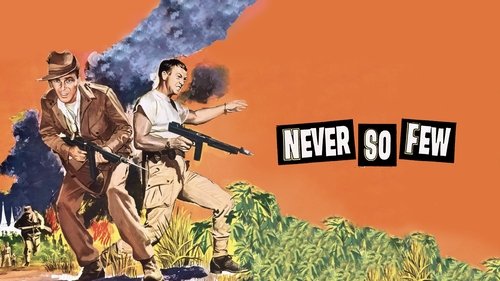




It’s difficult to find logic within this conflict. Why should things suddenly make sense now? The film follows an allied guerrilla group, led by Capt. Tom Reynolds (Frank Sinatra), as they confront both the Japanese army and Chinese troops under warlord control in the jungles of Burma. "In the hills of North Burma, gateway to the vast prize of Asia, less than a thousand Kachin warriors, fighting under American and British leadership of the O.S.S., held back 40,000 Japanese in the critical, early years of World War II. It has been said NEVER have free men everywhere owed so much to SO FEW." Alongside *Killer Warrants* and *The Unprecedented War*, *Never So Few* features Steve McQueen, Charles Bronson, Peter Lawford, Brian Donlevy, Gina Lollobrigida, Richard Johnson, and Paul Henreid. The film has a questionable reputation; originally planned as a Rat Pack war movie, it possesses both considerable strengths and frustrating weaknesses. The story itself is compelling—a part of the war deserving of being shown on screen—but the reason why the filmmakers didn't eliminate the romantic storyline remains not only puzzling but almost detrimental to the entire project. As lovely as Miss Lollobrigida is, her character’s development, along with her relationship with Sinatra’s reserved Reynolds, feels unnecessary. It doesn’t help in understanding other characters or advancing the plot. This subplot extends the film's running time past two hours; without it, the movie could have been a tight 90-minute portrayal of those who bravely fought in the Burmese conflict—which is what it should have been. The film succeeds when exploring both external and internal conflicts, as director Sturges demonstrates his skill in crafting action sequences that are consistently engaging. The cast performs well; McQueen shines in his scenes, Johnson embodies class, while Sinatra, after shedding a false beard, displays a talent for portraying emotional turmoil, making it easy to sympathize with him even when he's being stubborn—though that’s not exactly a challenge for him. The technical aspects are inconsistent: studio sets are easily identifiable, but the location sequences filmed in Ceylon are authentic and visually appealing. The Panavision photography (William H. Daniels) is beautiful, a vibrant Metrocolor experience, though Hugo Friedhofer delivers an unusually unremarkable musical score. It’s easy to understand why this film generates divided opinions; it feels episodic, and that romance really weighs it down. However, the film does have considerable merit and at least brings a crucial story into public awareness. 6/10
On September 24, 2026
#27857▼ 21
27857th by Pulse movie online15.4PULSEPulse MeterOur daily Pulse Meter measures public activity and popularity signals across the web.How it works →














