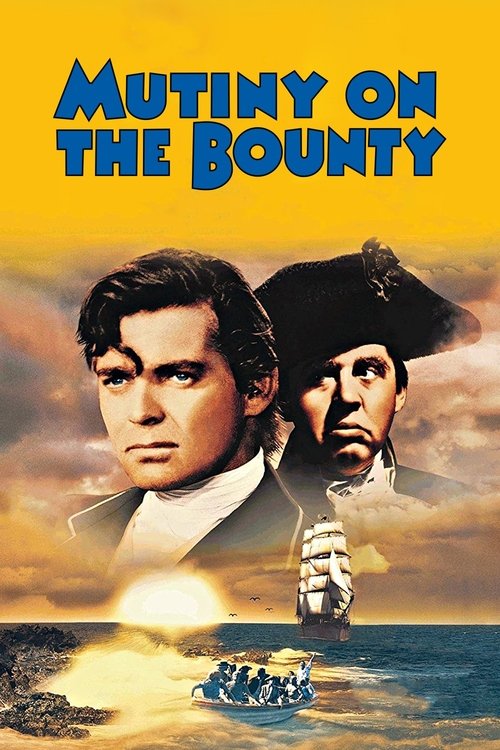




You’ll be hearing accusations leveled against me when I return to England with the fleet. Soon after, mutiny will be associated with my name. A harsh captain leads an unwilling group of sailors on a two-year journey that would ultimately reshape British maritime law... Directed by Frank Lloyd and featuring Charles Laughton, Clark Gable, and Franchot Tone, this 1935 adaptation of the frequently retold story of "Mutiny on the Bounty" (based on the book by Charles Nordhoff and James Norman Hall) has become the standard against which all other versions are measured. From the beginning, you know you’re in capable hands thanks to Laughton's portrayal of Captain Bligh as a pompous villain, and Gable’s depiction of Fletcher Christian, the attractive hero who decides he’s had enough of oppression and leads a rebellion against the tyrannical Bligh. The film really succeeds because of its focus on these characters; instead of indulging in fanciful nautical adventures, it prioritizes the individuals involved and the conflicts they experience. Drawing from an actual historical event, there's a sense of authenticity as the sailors aboard The Bounty confront the difficult realities of seafaring life in the 1700s—a time when their captain would readily whip a sailor who was already injured. We see both the admirable qualities and the worst behaviors of men at sea, a period where devotion and strict rules were both demanded and enforced as a matter of course. It's an unfortunate story, although it loses some momentum during the middle part when the ship arrives in Tahiti and everything turns into celebration and carefree enjoyment, which feels out of sync with the severity of the main narrative. However, once Laughton and Gable face off against each other, we witness something truly remarkable; bitter enemies are created, and they guide us toward an ending that prompts the audience to question whether the events were really warranted. 9/10
On October 3, 2026
#18794
18794th by Pulse movie online2.6PULSEPulse MeterOur daily Pulse Meter measures public activity and popularity signals across the web.How it works →














