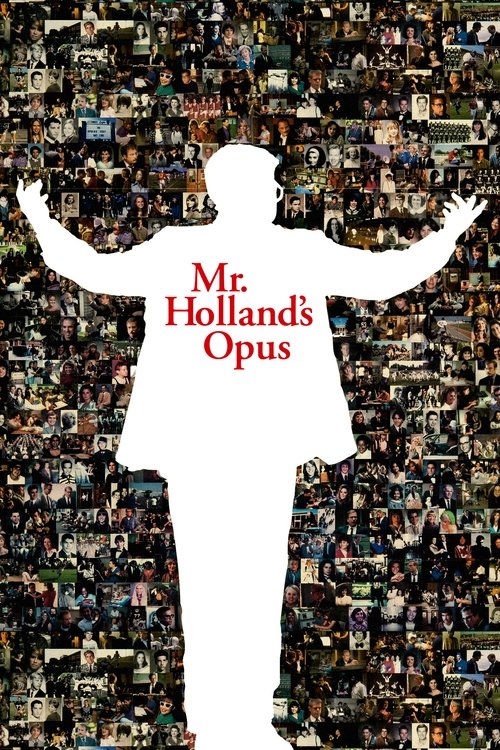





It’s another film about an exceptional teacher who changes his students’ lives... yet another one. What I enjoy most about a movie, beyond having a good story and keeping me entertained for a while, is when it explores different subjects and themes. This kind of thoughtful questioning, accessible to everyone, feels more appealing than a lengthy book and represents a key strength of cinema. And this film offers plenty of topics worthy of consideration. First off, I have to say that the film is really good! It’s been largely forgotten over time and deserves another look. In my opinion, it's Stephen Herek’s best work; he’s generally an average director who mostly works in television. The film’s strengths are primarily due to the excellent script by Patrick Sheane Duncan, which tells the story of a composer who takes on a job teaching high school music to make ends meet and ultimately influences several generations of students, instilling in them a love for music while also trying to protect and support his own son, who was born deaf. Beyond its moving story, we have talented actors delivering committed performances: Richard Dreyfuss may not be the most prominent actor these days, but he gives an outstanding performance here and even earned an Oscar nomination (he lost to Nick Cage, who delivered a powerful performance in “Leaving Las Vegas” that was more psychologically demanding). Glenne Headly and a young Terrence Howard provided strong support. The film touches us with its narrative, emphasizing the importance of music and artistic education. In today’s society, where we are increasingly valued by employers for our earning potential, subjects like the arts and humanities (history and philosophy, for example) are often undervalued because they seem to offer limited career prospects or practical applications. This feels unfair: the humanities encourage critical thinking and broad knowledge, while the arts cultivate an aesthetic sense and a capacity for self-expression that can be understood across cultures. It’s disappointing when human resources departments tend to have such narrow perspectives. The film handles deafness in a thoughtful way, demonstrating that even someone who cannot hear can appreciate music and that deafness doesn't prevent living a full and happy life. The film has just two significant drawbacks: the first, and most concerning for me, is its reliance on familiar tropes found in movies about teachers and their impact. This was handled more effectively in “Dead Poets Society” and “Mona Lisa Smile”. At this point in the story, there’s nothing particularly original. The second issue is the unnecessary romantic tension between Holland and one of his young students; it feels out of place and could have been cut from the final version.
On October 1, 2026
#6531
6531st by Pulse movie online3.9PULSEPulse MeterOur daily Pulse Meter measures public activity and popularity signals across the web.How it works →