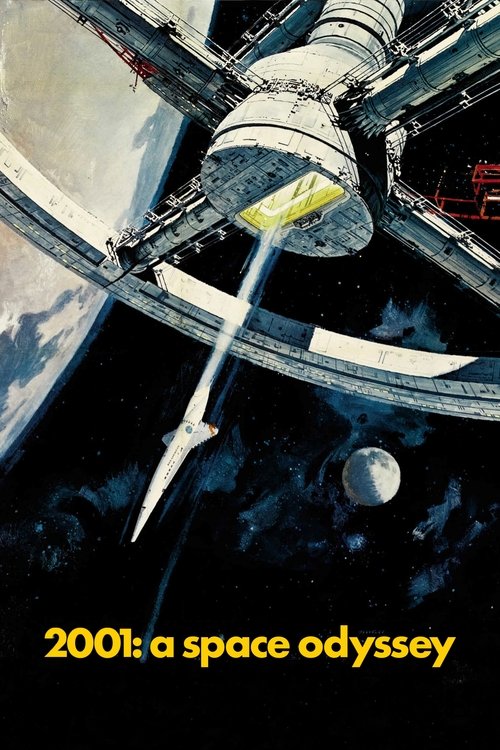





_**A Pondering Look at Space and Humanity's Place Within It**_ When an old alien structure is found on the Moon, it sparks a mission to Jupiter. However, the astronauts encounter unforeseen issues with their ship’s computer system, HAL 9000. William Sylvester portrays an official from US Astronautics during the initial portion of the film, while Keir Dullea and Gary Lockwood take on the roles of the two astronauts who remain operational in the latter half. Stanley Kubrick (director/writer) and Arthur C. Clarke (writer) brought “2001: A Space Odyssey” (1968) to life—an artistic science-fiction film exploring themes like human development, advanced technology, the beauty of space, the routine nature of space travel, artificial intelligence, and the enigma surrounding extraterrestrial existence. It incorporates elements reminiscent of “Planet of the Apes,” which premiered more than six weeks prior, alongside aspects seen in “Star Trek: The Motion Picture,” released eleven years later and clearly influenced by this unique movie. The film opens with a depiction of "the dawn of man" serving as an introductory sequence before swiftly moving to the 21st Century—a jump often described as the longest flash-forward in cinema. The portrayals of space travel and life in space feel remarkably realistic. However, “2001” distinguishes itself by eschewing conventional narrative filmmaking approaches and frequently presenting a nonverbal experience, which can leave some viewers feeling amazed while others find it dull. It's not intended to deliver typical excitement but rather to inspire a disturbing sense of wonder. It’s not simple entertainment; instead, it offers a meditative and transcendent artistic work. The 1985 sequel, “2010: The Year We Make Contact,” is more conventional and less puzzling, yet still serves as a worthwhile companion piece. The soundtrack combines classical pieces, such as Richard Strauss's "Also Sprach Zarathustra," with four unsettling modern compositions by György Ligeti. The sections of the film that feature these latter pieces particularly create an unnerving feeling about what’s unknown. I especially enjoyed the astronauts’ interactions with HAL, which occupies nearly an hour of screen time and is the only portion of the movie that creates a subtle sense of suspense. To be honest, I don’t think humans originated from apes (eye roll). But even if that were the case, where did the apes themselves come from? Did they simply appear unexpectedly? If so, when? How? Biogenesis—a scientific principle—states that life arises from existing life. So what living thing initially created the apes or the basic organisms supposedly evolved into them? The film has a running time of 2 hours and 29 minutes. GRADE: A-/B+
On October 3, 2026
#209▼ 17
209th by Pulse movie online15.2PULSEPulse MeterOur daily Pulse Meter measures public activity and popularity signals across the web.How it works →