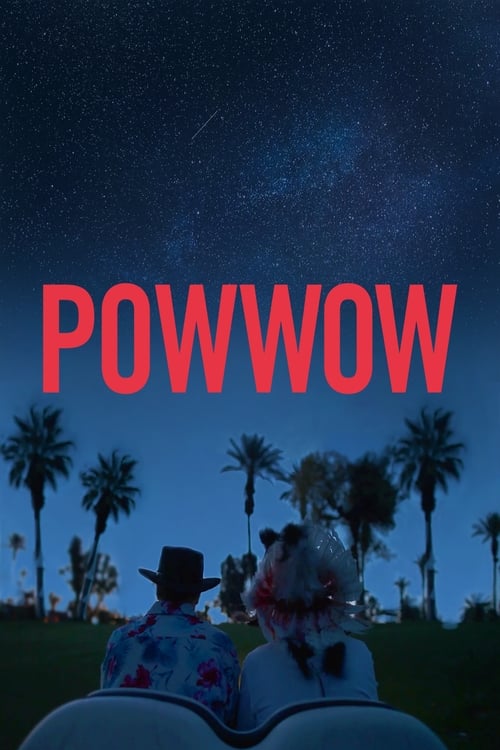




“Pow Wow,” featuring Robert Knoop, Byron Grace, Ronald House, Antonio Heredia Jr., and Ann Heavey, arrived on April 18, 2023. Directed by Robinson Devor—known for “Zoo,” “Police Beat,” and “The Woman Chaser”—the film is a visually striking exploration of Palm Springs and the Coachella Valley in California, and the people who call it home. Spanning five years of filming, this thematically intricate documentary avoids a conventional narrative structure, instead presenting a broad view of residents and locations. Drawing inspiration from Errol Morris’ “Vernon, Florida” and Werner Herzog’s “Fata Morgana,” Devor allows the Coachella Valley to take center stage as director of photography Sean Kirby (of “Happy Valley,” “The Tillman Story,” and “Zoo”) captures the stark beauty of the Sonoran Desert. "Pow Wow" is a rich visual experience, showcasing unusual conversations that touch on topics like the implications of the Cahuilla Native American tribe living near one of California’s largest aquifers and how a desert can sustain over 130 luxury golf courses. As Devor puts it, “Pow Wow is meant to be an homage without the restraint of having to tell a particular story or focus on any individual.” His aim was to portray Palm Springs in all its peculiar, striking glory. "Pow Wow," also known as "Ethnographic Encounters With the People of the Desert Empire (2010–2015)," is a documentary that highlights cultural contrasts within Palm Springs and occasionally presents scenes that are deeply unsettling; for example, hearing country club members refer to Native people with outdated terms while seemingly oblivious to the impact of golf courses on water resources. The film often feels uncomfortable, centering primarily around these individuals. Given the title "Pow Wow," one might have expected a greater presence of Indigenous voices, but the perspective of the Khaweya people is limited to brief moments. This, however, seems to be a deliberate choice, revealing a sharp irony as it focuses on an event that has been appropriated, showing women wearing inexpensive costumes reminiscent of Pocahontas. The effect is jarring. Viewers also hear white men speak about Native peoples as if they no longer exist while simultaneously speaking for them, similar to how non-player characters in “Elder Scrolls” might discuss the Dwemer. Ultimately, it’s alienating and raises questions about its necessity beyond simply exposing a truth—that California, like anywhere else, has an abundance of such individuals. Filmed over five years by director Robinson Devor, who is also a film professor at Cornish College of the Arts, every aspect of this project feels intentional, offering an uncomfortable glimpse akin to Borat’s portrayal of culture clashes, which, like "Pow Wow," was inspired by Werner Herzog's “Fata Morgana.” Unlike Borat, there’s no overt comedic relief unless you find humor in ignorance. The experience is comparable to spending a holiday with your friend’s racist family who would defend their beliefs aggressively. The narrative exists everywhere and nowhere at once; like an observer on the wall, we catch glimpses into people's lives and see how they interpret the story of Willie Boy, a Paiute-Chemehuevi man involved in a tragic incident involving his underage cousin. The film incorporates clips from the 1960s movie “Tell Them Willie Boy Is Here,” which starred Robert Blake, an Italian American actor known for playing Latino and Indigenous characters. The documentary is informative and achieves its purpose with a quiet confidence—a skill that I believe defines Robinson Devor’s work. He has created something open to individual interpretation based on our personal viewpoints, as any good documentary should.
On October 4, 2026
#286563
286563rd by Pulse movie online0.1PULSEPulse MeterOur daily Pulse Meter measures public activity and popularity signals across the web.How it works →