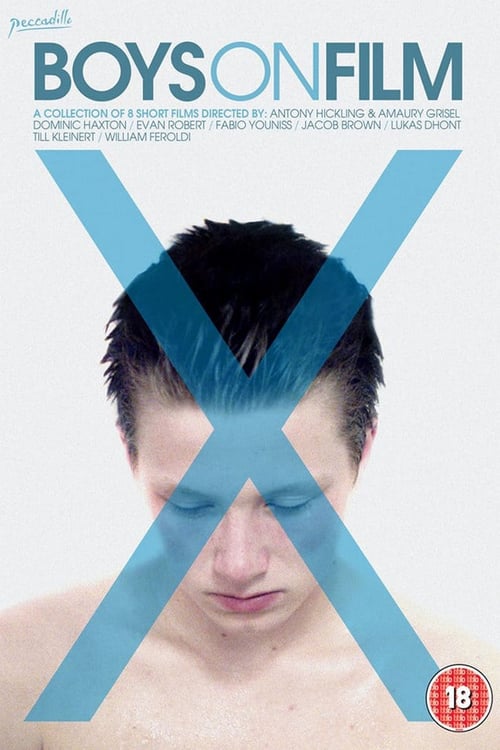




The tenth installment in the celebrated short film series, *Boys on Film X*, presents an array of LGBT themes and lifestyles through films showcased at festivals like the Iris Prize Film Festival and BFI London Lesbian & Gay Film Festival. The collection explores challenging social boundaries with narratives ranging from troubled adolescence to loneliness in later life. First is "Blinders," a ten-minute short by Jacob Brown, focusing on a young couple (Nathaniel Brown and Byrdie Bell) whose relationship becomes complicated by the arrival of an androgynous, polyamorous man (Luke Worrall). The film suggests infidelity and unspoken suspicions within the established partnership. The narrative raises questions about relationships and desire, concluding with an open ending that leaves the audience to ponder the future of the three characters' connection. Visually striking cinematography uses light and shadow, possibly as a metaphor for exploring romantic connections; it’s recommended for those seeking an aesthetically pleasing short film, even if you prefer more definitive conclusions. Following "Blinders" is the thirteen-minute British short “A Stable for Disabled Horses,” directed by Fabio Youniss and shot in black and white. The story centers on the uneasy dynamic between two friends, set entirely within Benny’s (Daniel Swan) living room as he hosts a farewell party for Kanoute (Daniel Simonsen), who is moving to Norway. Tension builds as Benny grapples with unrequited feelings for his friend. Like "Blinders," this film also ends on an ambiguous note, implying that Kanoute acknowledges Benny's feelings but leaving their future uncertain. The short offers a realistic portrayal of romantic longing within an urban setting, enhanced by its black and white aesthetic and commendable performances from the actors. The third film, “Little Gay Boy chrisT is Dead,” is a longer, thirty-minute piece, the second in Anthony Hickling and Amaury Grisel’s Gay Boy trilogy. The narrative follows Jean Christophe (Gaëtan Vettier), who aspires to become an international model while living with his prostitute mother in Paris. After joining what appears to be a questionable modeling agency, JC undergoes experiences that profoundly impact him physically and emotionally, stripping away his innocence. The film includes scenes of BDSM and domination, as JC willingly endures various torments hoping for advancement. A male dancer’s performance—initially confident and brightly colored—gradually becomes marred with dirt and despair, visually representing the loss of JC's innocence. The cinematography is sharp and focused, prompting reflection on social dynamics and circumstance. Next is “Headlong,” a seventeen-minute short by Lukas Dhont, depicting a young ballet dancer (Jelle Florizoone) preparing for a competition. Isolated in his hotel room, he’s interrupted by a stranger (Thomas Coumans) seeking refuge from the police. They form an amicable connection, but the dancer's hesitation to return to his solitude leads him to follow the man, resulting in a brief, platonic encounter before the stranger leaves. The film explores themes of loneliness and interaction, tinged with attraction, and showcases strong performances that allow for multiple interpretations. Though somewhat anticlimactic, its open-ended nature allows viewers to focus on the relationship between the characters. “Boys Village,” a twenty-two minute piece by Till Kleinert, shifts gears with a horror-inspired theme. Set in an abandoned coal miner’s holiday camp, the film follows Kevin (Benjamin Thorne), an eleven-year-old ghost who has haunted the site for decades. He develops affections for Alex (Andrew McQueen), a member of a group using the camp for graffiti and gatherings. Through unsettling events, Kevin unintentionally frees himself from his earthly bounds, with consequences for another boy. The film creates suspense through its depiction of a young boy and what lies beyond a darkened doorway, featuring believable actors who convey their characters effectively, even with minimal dialogue. The atmospheric soundtrack enhances the plot’s tension. “Teens like Phil,” a twenty-minute short from Dominic Haxton & David Rosler, presents a relatable American story about self-acceptance within the LGBT community. Phil (Adam Donovan), a high school student, struggles to accept his sexuality and endures bullying from peers and even his former friend and crush, Adam (Jake Robbins). Adam’s own internal conflicts manifest in verbal and physical aggression towards Phil, pushing him to the brink. The film highlights the distress faced by queer youth and emphasizes the need for awareness and education. It's a professional production with strong character development. William Feroldi’s fourteen-minute “Inflatable Swamp” is a heartwarming story about finding balance between fleeting pleasures and genuine connection. Matt (Francis Beraud), a man who engages in numerous sexual encounters, keeps track of his partners on balloons until he meets Luke (Paul Huntley Thomas), sparking feelings of tenderness. The film’s beautiful cinematography, particularly the bathroom filled with blue balloons, is notable. Featuring only one line of dialogue, it effectively conveys Matt's interest in Luke and showcases strong character portrayals. The short offers an insightful look at gay male relationships. Finally, “Yeah
On October 3, 2026
#153523
153523rd by Pulse movie online0.1PULSEPulse MeterOur daily Pulse Meter measures public activity and popularity signals across the web.How it works →