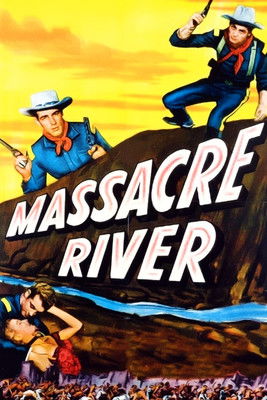




I seem to be cursed when it comes to movies. Massacre River is the work of director John Rawlins, with a script by Louis Stevens. The film features Guy Madison, Rory Calhoun, Carole Matthews, Cathy Downs, Johnny Sands, and Steve Brodie. Music is composed by John Leipold and Lucien Moraweck, and cinematography is handled by Jack Mackenzie. The story involves three army buddies, two women, and Native Americans upset about land being taken from them – a recipe for trouble, to be sure. Massacre River isn't an easy Western to suggest because it’s not what people expecting a cavalry versus Indians action film would want; this is not a fast-paced "B" movie. It puts more emphasis on the relationships between characters and tells a story that delves into darker themes than usual. In fact, it’s anything but typical, something even a New York Times reviewer at the time initially misjudged. Five people find themselves embroiled in a complicated situation where friendships and desires are put to the test, and emotions run high. Fortunately, those involved had the confidence to make bold choices regarding some of the characters. These decisions push the film toward a film noir style, which is enhanced by striking black-and-white photography and shadows that intensify the story's darker moments—a clear awareness of the tense filmmaking style popular at the time. It starts in a lighthearted way with friends joking around, even hinting at something romantic between two of the men as they wrestle playfully in water (seriously), and a meeting between the fort colonel and the Indian chief (played by Art Baker and Iron Eyes Cody) establishes a problem brewing between the groups; it seems like it’s going to follow a predictable path. However, once the action moves to Jackson—the last outpost near Massacre River—the whole feel changes dramatically, becoming a place of intense human suffering and unpredictable fate. There are some shortcomings, though. It's good to see Calhoun and Brodie in the same film, but fans of the former will have to wait for him to really shine, while the latter’s role feels minimal. The plot touches on staffing shortages at one of the forts, but doesn't explore it further, and the Native American storyline ultimately seems added onto the central human drama. However, the cast delivers solid performances, the photography is pleasing, and Western fans will appreciate seeing the familiar Iverson Ranch location, along with shots taken at Canyon de Chelly National Monument. It’s definitely worth watching for those who enjoy Westerns with noir elements. 7/10 P.S.: Some sources claim it was filmed in Sepiatone. I'm not sure if that's how it was originally shot, but the print I watched on TCM's HD channel was a standard, very well-looking black and white version.
On October 1, 2026
#83334
83334th by Pulse movie online1.2PULSEPulse MeterOur daily Pulse Meter measures public activity and popularity signals across the web.How it works →