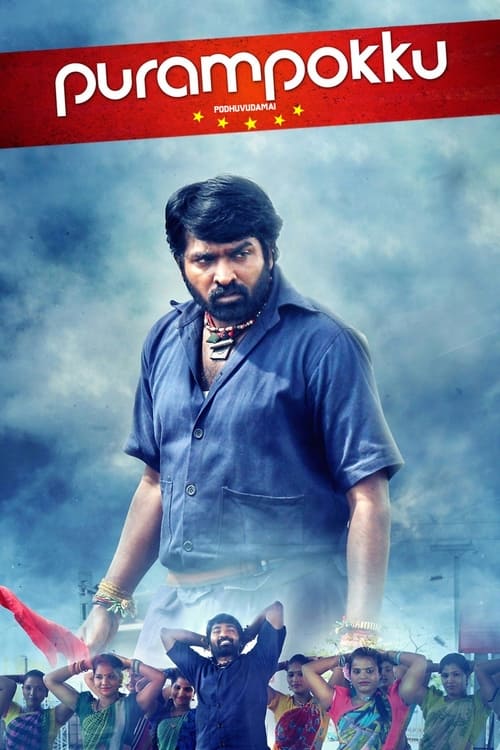




It would have been easy for another filmmaker to craft Purampokku Engira Podhuvudamai as a straightforward prison escape story, incorporating discussions about communism, capitalism, and capital punishment along the way. However, SP Jhananathan chose a different path, shaping Purampokku into an invitation to consider these subjects without resorting to heavy-handed preaching. The director’s success in achieving this while avoiding compromises for censorship is noteworthy. The story centers on Balusamy (Arya), a young man adhering to communist ideals who receives a death sentence at the film's start for actions deemed anti-social by the government. In his view, these acts were acts of service and protest against unchecked privatization and the nation’s role as a receptacle for waste from wealthier countries. Meanwhile, Macaulay (subtlety is lacking), a prison officer, firmly believes in the authority of the State and feels obligated to uphold its laws and constitution. To carry out Balu's sentence, Macaulay enlists Yamalingam (a reminder that subtlety isn’t a priority), the state’s sole executioner. However, Yamalingam is burdened by his past; he comes from a lineage of hangmen and is haunted by having executed an innocent person during his adolescence. Consequently, he resists performing this task. Simultaneously, Balu's fellow revolutionaries, led by Kuyili (Karthika), plan to eliminate Yamalingam in order to delay the execution. Upon realizing his intentions, they persuade him to assist in Balu’s escape from prison. The resulting conflict between the government, the revolutionary, and an ordinary man unfolds as a result. Jhananthan takes his time developing the narrative, devoting excessive screen time to songs and showcasing the elaborate prison set design. However, once the plot gains momentum, Purampokku becomes thoroughly captivating. It’s impressive that the director manages to deliver both a meaningful political commentary and an effective thriller simultaneously. Employing everything from modern technology like phishing and QR codes to classic techniques—such as a letter whose message is revealed only when illuminated by fire—the film builds suspense. The escape sequence stands out, with its tight editing keeping viewers on edge. The movie would have benefited from stronger casting choices. Arya seems ill-suited for the role of Balusamy; his appearance doesn't match the character’s background. Balu is portrayed as someone dedicated to his beliefs, capable of inspiring devotion and silently commanding respect (frequently likened to Bhagat Singh). An actor who could convey this inner fire, intellect, and resolve was needed, but Arya delivers a performance similar to his previous roles—casual and detached. It's difficult to accept him as someone capable of writing "The Silence Of Revolution." Karthika also appears too young and inexperienced as Kuyili, and the director’s frequent use of close-ups draws attention to her raised eyebrows rather than her acting. Shaam is adequate, but given that Macaulay is presented not just as a rigid officer but also as someone who contemplates his actions, a more nuanced performance would have been beneficial. Fortunately, Vijay Sethupathi elevates the film with a sensitive portrayal. Initially, he seems to be repeating elements from Idharkudhaane Aasaipattai Balakumara, but then excels at conveying his character’s emotional struggles. While Balusamy is central to the story, Yamalingam truly embodies its heart.
On October 4, 2026
#104880
104880th by Pulse movie online0.4PULSEPulse MeterOur daily Pulse Meter measures public activity and popularity signals across the web.How it works →