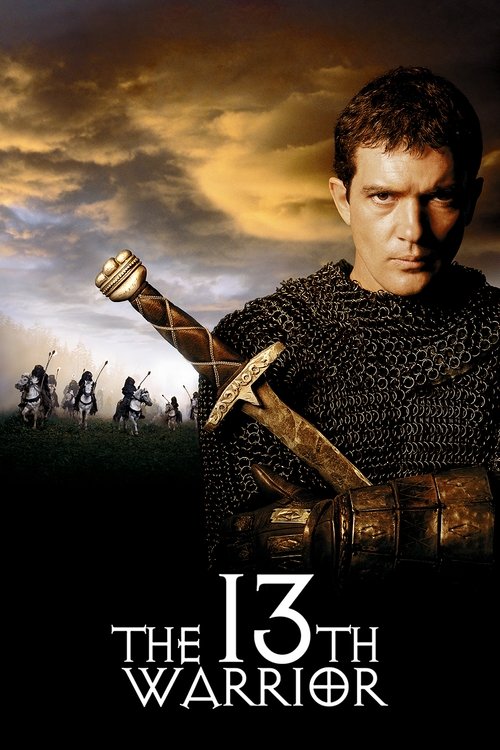





"The 13th Warrior" (1999) draws its narrative from Michael Crichton's novel "The Eaters of the Dead," which merges the Beowulf legend with a historical account centering on an Arab diplomat who finds himself living among Vikings after being exiled from his homeland because of an affair. Antonio Banderas portrays the Arab character, while Vladimir Kulich takes on a leading role within the Viking cast, embodying the Beowulf figure of Buliwyf (pronounced BULL-vie in the film). It’s worth noting that Kulich would have been exceptionally well-suited for the part of Mighty Thor years ago! The movie's plot is quite compelling: once Banderas joins the Vikings, they encounter a mysterious and brutal tribe originating from deep within the forest. He becomes the sole non-Viking chosen to help twelve Norsemen eliminate this threat to nearby settlements, thus earning the title "the 13th warrior." The film boasts impressive elements across the board—the cast, characters, storyline, locations (Campbell River, Vancouver Island), set design, costumes, musical score by Jerry Goldsmith, and cinematography are all top-notch. Running just over an hour and a half, the movie maintains a brisk pace with plenty of action sequences. "The 13th Warrior" is undoubtedly a quality film, but certain aspects of the story feel somewhat underdeveloped. This likely stems from disagreements between Michael Crichton and director John McTiernan; Crichton requested reshoots and reportedly removed around 30 minutes of McTiernan’s original work, including scenes intended to develop characters. This is evident early on: Banderas' backstory regarding his exile due to infidelity is conveyed in just a few minutes. Similarly, the Vikings are introduced at approximately the eight-minute mark with little sense of mystery or suspense. The contrast between the Arab culture and the rough Norsemen is well done, but I would have appreciated seeing these characters more fully realized. After all, the better we know the individuals involved, the more invested we become in their fates. This leads to the final thirty minutes of the film, which depict Banderas and the Vikings infiltrating the tribe's stronghold and launching an attack on a Viking village. While the visuals during these scenes are striking, they unfold so rapidly that viewers might feel disoriented and strangely disconnected from the story’s resolution. Ultimately, this suggests "The 13th Warrior" had the potential to be a truly remarkable 140-minute Viking epic, comparable to “Troy” (2004); instead, we are left with a fast-paced, action-driven film intended for mainstream audiences. Vladimir Kulich has expressed doubt that a Director's Cut will ever surface. Despite its shortcomings, I still find merit in the film as it stands. It’s an enjoyable Viking adventure, professionally made, despite the issues encountered during post-production. It’s the kind of movie that improves with repeated viewings, likely because everything moves so quickly on first exposure. Even with its flaws, "The 13th Warrior" comes close to rivaling Kirk Douglas' acclaimed 1958 film "The Vikings" as one of the greatest Viking movies ever created. A Director’s Cut could conceivably even displace “The Vikings” from its prestigious position. Filming took place in British Columbia: Campbell River on Vancouver Island, Williams Lake and Pemberton. GRADE: B-/B
On October 4, 2026
#1902▲ 63
1902nd by Pulse movie online6.3PULSEPulse MeterOur daily Pulse Meter measures public activity and popularity signals across the web.How it works →