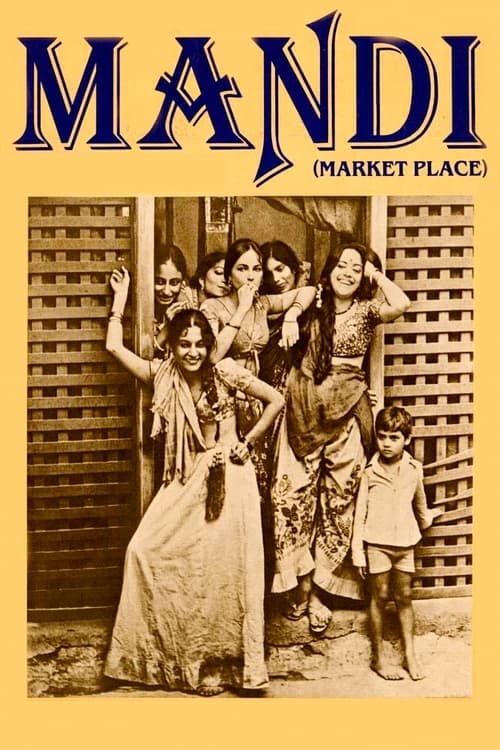




Adapted from a short story by Ghulam Abbas, Mandi tells the story of a group of prostitutes led by Rukminibai, who find themselves battling authorities attempting to shut down their brothel and displace them in the name of urban development. The film is considered among Shyam Benegal's finest works. Benegal brings together a cast of skilled performers; Shabana Azmi stands out as the rough, self-centered, yet sympathetic “Bai” (madam) of the "Khota" brothel, while Smita Patil portrays Zeenat, who appears gentle but is actually defiant. The movie's strength lies in these performances, along with Naseeruddin Shah’s, whose character offers insights into the workings of the brothel and the connections between its residents. The dynamic between Rukminibai and Tungrus seems straightforward at first, but it reveals a deep concern they have for one another; his initial harshness toward her stems from this worry. A central focus is the connection between Rukminibai and Zeenat: Rukminibai views Zeenat as a daughter, but feels threatened by Zeenat’s desire for independence. She becomes overly protective of Zeenat, ultimately pushing away the other women who work there. Her seemingly strong personality begins to crumble, and just as she seems poised for a fresh start and potential self-reflection, she falls back into a pattern of controlling love and maternal dominance. Other noteworthy aspects include Shanti Devi, a "social worker" concerned about the city's perceived moral decline, who clashes with the prostitutes in her quest to restore honor. A particularly upsetting scene occurs when Shanti Devi lectures a crowd on the importance of respecting women and condemning prostitution, declaring she will persuade her “sisters” to abandon this profession. The response from some of the women – "And where will we get our bread?" – is met with Shanti Devi’s detached reply: "Bread isn't everything in life." One woman retorts with exasperation, "You must get it for free.” The prostitutes are caught between powerful forces—a self-proclaimed feminist social worker who lacks genuine understanding of women's struggles and a wealthy industrialist, Gupta, who intends to demolish their brothel while misleading them. Additional female characters include Gupta’s repressed and childlike daughter, whom he arranges to marry into another influential family with its own ties to the prostitutes. Aditya Bhattacharya plays Sushil, the naive young man engaged to Gupta's daughter, but drawn to Zeenat’s vibrancy and beauty. His attraction soon creates complications. The film subtly exposes the moral shortcomings of those surrounding them, highlighting how the prostitutes—who seem more grounded in morality than the other "respectable" people—ultimately bear the blame for “moral degradation” and are forced to leave the city (though their troubles don't end there). This theme is reflected in a recurring song ("Zabaane Badalte Hain Har Aan Khubaan.. Yeh Sab Kuch Hai Bigdi Zamaane Ki Baatein"), which Rukminibai often hums and encourages Zeenat to sing.
On October 3, 2026
#106202
106202nd by Pulse movie online0.4PULSEPulse MeterOur daily Pulse Meter measures public activity and popularity signals across the web.How it works →