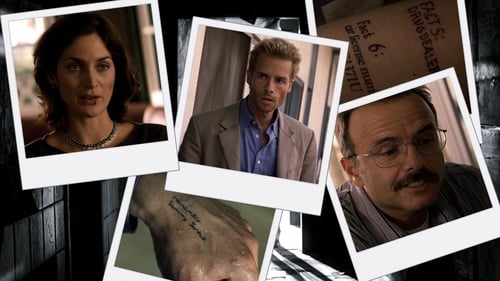





Christopher Nolan’s ‘Memento’ pays homage to classic film noir stories centered on revenge and mystery. By introducing an innovative element, Nolan manages to captivate audiences throughout the movie and long afterward. What sets this neo-noir apart from others is its fragmented and intricate storyline that consistently moves backward through time. Initially, the viewer witnesses the main character carrying out his revenge killing—a triumphant moment usually reserved for a film noir’s conclusion. The narrative then begins to unfold in reverse order, revealing the reason behind this structure. Leonard Shelby (Guy Pearce) and his wife are attacked at home; his wife is killed while Leonard sustains a brain injury that prevents him from forming new short-term memories. Constantly reminded of the trauma, he’s driven to avenge his wife's death. As the film progresses, viewers increasingly experience what Lenny experiences. The audience lacks awareness of events preceding the current scene, mirroring the protagonist’s confusion. To manage this condition, he uses notes, photos, and tattoos to record information about himself and others, including details about his wife’s killer. He receives assistance from "Teddy" (Joe Pantoliano) and Natalie (Carrie-Anne Moss), though he can't fully trust either of them—both actors previously appeared in ‘The Matrix (1999)’ alongside Pantoliano, creating a sense of disorientation for those familiar with that film. The movie’s events are presented across two distinct narratives: one in color and the other in black and white, alternating throughout. Leonard's investigation is shown through five-minute color sequences arranged in reverse chronological order, while the brief black and white scenes proceed chronologically, depicting Leonard speaking on the phone with an unknown person—a conversation the audience can’t understand (these segments are more direct nods to the film noir genre Nolan is embracing). This directorial approach ensures that the audience fully connects with Leonard's situation because they possess no greater knowledge than he does. It also generates moments of both humor and emotional impact, relying on dramatic irony. Nolan employs handheld camera work, a pinkish hue, and sharp editing (with only occasional fade-outs) to disorient viewers and foster empathy for Leonard’s character. The concept originated as a short story by Nolan's brother, Jonathan, who also contributed to the screenplay. The film's dialogue stands out as its strongest aspect, featuring insightful, powerful, and poignant speeches about memory. As we understand how much we depend on memory for our sense of reality, we begin to question reality itself. References to the bible and the theme of faith suggest that the entire movie could be interpreted as a metaphor for belief in Christianity or any other religion. ★★★★★
On September 25, 2026
#480▲ 870
480th by Pulse movie online53.6PULSEPulse MeterOur daily Pulse Meter measures public activity and popularity signals across the web.How it works →