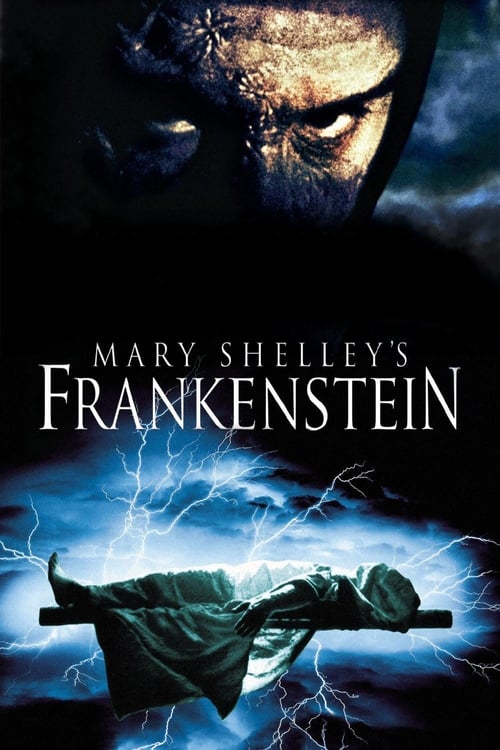



Kenneth Branagh’s 1994 adaptation of the frequently-filmed Frankenstein story holds the distinction of being the most accurate to Mary Shelley’s 1818 novel seen until that point, a fact reflected in its title. The movie boasts strong performances and impressive visuals – the sets, costumes, and locations are all excellent. There are several memorable scenes; one example is when the creature spends time with a peasant family, his unseen assistance being mistaken for the work of a benevolent spirit residing within the woods. My initial viewing left me feeling somewhat put off by its frenetic energy. Characters appear quickly, scenes move rapidly, timelines shift, and the soundtrack is quite loud, which I felt was excessive. At times, the characters seemed overly dramatic, with lots of emoting, shouting, running, confrontations, fights, and deaths – "Ahhhhhh!!" "NoooOOOOOoooooo!!!" I just wished they would calm down for a few minutes. Since then, I’ve read Shelley's book and watched Hallmark’s 2004 version, “Frankenstein,” starring Luke Goss as the creature, which clocks in at nearly three hours. On subsequent viewings, I came to appreciate how Branagh balances those intense moments with more restrained sequences. When it occasionally feels over-the-top, it's because he attempted to pack a large portion of the novel into a two-hour runtime. On the positive side, this approach may appeal to viewers who enjoy constant excitement and melodrama. The 2004 version has almost an additional hour to develop things more slowly and with a darker, more brooding tone; this one feels more like a “blockbuster.” Regarding that 2004 film, the creature’s appearance is closer to the book's description – long black hair and white teeth – but he’s also too handsome in a dark, gothic style, reminiscent of Type O Negative’s Peter Steele. The creature in Branagh’s version sheds the hair for a more gruesome look, aligning with Victor’s depiction of him as “hideous.” Regardless, De Niro delivers a solid performance in the role. A highlight is when the monster finds refuge with a rural family, unaware of his presence. This allows the audience to get to know the creature and feel sympathy for his situation, although that feeling eventually dissipates. He IS a 'monster,' after all; and he has an interesting conversation with Victor in his secluded glacial home high in the mountains, which helps explain his actions. The locket framing sequence is disappointing, but that was also a weakness in the novel itself. While both this version and the 2004 film strive for faithfulness to Shelley’s book, they each leave out sections and make alterations. For instance, both omit Victor's travels to Scotland and Ireland; cutting those parts seems like a wise decision. This adaptation changes one character’s death from a court-ordered hanging to a lynching, as opposed to what is written in the novel. Despite these differences, I found the unexpected plot twist in the final act enjoyable – I won’t spoil it. And the tragic ending is well done. "Mary Shelley's Frankenstein" shares similarities with "Bram Stoker's Dracula" (1992) in that they both look fantastic and were produced by Francis Ford Coppola. Any shortcomings can be attributed to the challenge of adapting complex 19th-century gothic horror classics for modern audiences. The film’s running time is 2 hours, 3 minutes, and filming took place in England (Shepperton Studios) and the Swiss Alps. GRADE: B+
On October 3, 2026
#873▲ 476
873rd by Pulse movie online8.8PULSEPulse MeterOur daily Pulse Meter measures public activity and popularity signals across the web.How it works →