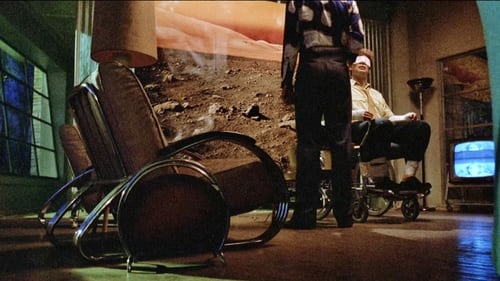





Retired FBI specialist Will Graham returns to action to pursue a serial killer targeting families, with his crimes seemingly connected to lunar cycles. This process stirs up painful memories from his previous experiences in the field. Before films like *The Silence of the Lambs* achieved widespread popularity and director Michael Mann became a well-known figure, there was *Manhunter*, his adaptation of Thomas Harris' psychological thriller, *Red Dragon*. Even years later, it feels somewhat redundant to discuss Mann’s stylistic choices—his use of framing, his commitment to his craft—but after watching the film on Blu-ray, I am struck again by its brilliance and unsettling nature. The film remains a clinical examination of madness, daringly placing both a serial killer and the man hunting him within the same psychological space, prompting us, along with William Petersen’s FBI agent Will Graham, to empathize with Tom Noonan's troubled Tooth Fairy character. It's remarkable that Francis Dolarhyde—the Tooth Fairy—is a functioning member of society; he is essentially an ordinary person who could live near you. The film provides insight into his damaged mind, fleshing him out as a person and exploring his motivations. Mann and his team avoid over-the-top or sensational performances; gore is used sparingly, with the true horror revealed in aftermath scenes, conversations, and seemingly harmless photographs, creating a nightmarish world. Suspense builds slowly through character development. Will must become the killer to understand him, which is dangerous because he has done it before when apprehending Dr. Hannibal Lecktor. To recapture that mindset, Will seeks out the doctor, who enjoys fine wines and human remains. These scenes highlight Mann’s skill; a brightly lit cell is filmed at an off-kilter angle, with each shot alternating between Lecktor and Graham behind bars—they are essentially one and the same. When Lecktor taunts Will about their similarities, Mann visually reinforces this connection. Dolarhyde's home has murky colors, gaudy furnishings, mirrors, paintings, and a lunar landscape; however, when he is with Joan Allen’s blind Reba, where he finds acceptance, the house feels peaceful due to the characters present. The finale shifts to a walled monstrosity that reflects the killer spiraling out of control. If one consistently acts like God, one will become like God. Lecktor, who later reappears as the familiar character in subsequent film adaptations, has limited screen time—less than ten minutes—courtesy of Brian Cox’s chilling, calculating, frightening, and intelligent portrayal. Yet, his presence is felt throughout the movie in various ways. While Lecktor's role contributes to the film's success, he is ultimately just one element of a compelling whole; I now realize Mann deliberately withheld more of him visually to create anticipation. Noonan is genuinely terrifying; he isolated himself from the rest of the cast during filming, with Mann’s enthusiastic encouragement, resulting in one of the most complex and memorable serial killer characterizations ever created. Lang excels as a sleazy paparazzo, Allen delivers a heartbreakingly effective performance without resorting to stereotypes about blind people, and Farina is a commanding presence as Jack Crawford, Will's friend and boss who brings him back into the fold knowing the potential toll on his mind. Ultimately, though, it’s Petersen’s film. Some critics have questioned his acting abilities, but with this and *To Live and Die in L.A.* he gave two of the best crime film performances of the 1980s. He so fully embodies Will Graham that he struggled to shake off the character even after filming ended. There's a scene in a supermarket where Will explains to his son about his "dark place," where "the ugliest thoughts in the world" reside, which is a powerful sequence of acting and showcases Petersen’s talents. Newcomers to Mann’s work should definitely watch the ten-minute featurette on the disc by Dante Spinotti. Besides saving me from having to describe Mann's visual techniques, it demonstrates how important the partnership between a director and cinematographer is in a film like this. The audio is crisp, preserving the soundtrack and eerie music of Rubini and The Reds. Some consider the music dated? I disagree; if it complements the tone and themes of a story, it can never truly be outdated—and that’s precisely what happens here with *Manhunter*. The director's cut is included but the transfer quality is poor, and there isn’t much difference anyway beyond one scene following the Dolarhyde/Graham confrontation. The theatrical version is perfect, beautifully realized on Blu-ray to create a true visual neo-noir masterpiece. 10/10
On September 22, 2026
#77847▲ 539
77847th by Pulse movie online6.0PULSEPulse MeterOur daily Pulse Meter measures public activity and popularity signals across the web.How it works →














