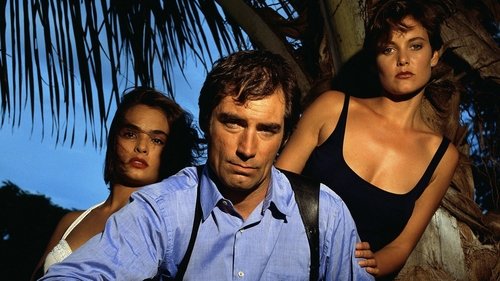




John Glen directed Licence to Kill, with Richard Maibaum and Michael G. Wilson writing the screenplay based on Ian Fleming’s characters and stories. The film stars Timothy Dalton, Carey Lowell, Robert Davi, Talisa Soto, Anthony Zerbe, Desmond Llewelyn, David Hedison, Benicio Del Toro, Frank McRae, Everett McGill, and Wayne Newton; Michael Kamen composed the score, and Alec Mills served as cinematographer. When drug lord Franz Sanchez brutally attacks Felix Leiter and kills his wife, Bond 16/007 disobeys orders and seeks revenge. With his license revoked by MI6, he operates independently. Licence to Kill has long been a divisive film among James Bond fans, sparking intense debates. Some feel it doesn’t fit the traditional Bond mold, while others appreciate its portrayal of a more grounded, human 007. It seems audiences tend to either strongly embrace or reject the movie. The film leans heavily into action-thriller territory, eschewing some familiar elements like elaborate sets and over-the-top villains—though Davi’s drug baron is presented as a realistic threat—and depicting Bond as a fugitive pursued by his former colleagues. Despite this shift, it still incorporates signature Bond touches such as gadgets and outlandish scenarios, including a tanker driving on its side and exploding toothpaste that doubles as weaponry. Licence to Kill stands out as an exceptional action thriller; the script is well-crafted, the cast delivers strong performances, and the film boasts impressive action sequences. From the opening aerial arrest to the spectacular tanker destruction at the end, the movie maintains a relentless pace, anchored by Dalton’s compelling portrayal of a rogue Bond with depth and complexity—intelligent, classy, flawed, driven, intense, sexy, and dangerous. Dalton's ability to convey raw emotion is captivating, and he successfully re-establishes Bond as a serious action figure. It was not until 17 years later that another Bond film would capture this same intensity, which was then celebrated as a fresh start for the franchise. The return of Hedison as Leiter, last seen in Live and Let Die, is a definite highlight; his chemistry with Dalton is enjoyable, and Leiter actively participates in the action. However, the filmmakers’ decision to portray Leiter as overly cheerful at the film's conclusion feels jarring given his severe injuries and the loss of his wife. Carey Lowell also shines as Pam Bouvier, a resourceful Bond girl who is both tough and attractive; her pilot skills prove useful, and she holds her own in fights. Davi convincingly portrays Sanchez as a cultured yet ruthless drug lord, while McRae commands attention, McGill maintains an air of mystery, Del Toro brings a touch of menace to his role, and Soto delivers a vulnerable performance as Lupe Lamora. Llewelyn’s Q also has a significant role, venturing into the field to assist Bond as MI6's only support. The film marked the end of Dalton’s time as Bond due to legal disputes between Danjaq and MGM/UA, which prevented another Bond movie from being made for six years. It also signified the conclusion of production duties for Cubby Broccoli, John Glen’s final direction of five Bond films, Richard Maibaum's last screenplay, and the last appearances by Robert Brown as M and Caroline Bliss as Moneypenney. Despite a common misconception that Licence to Kill was unsuccessful, it earned $156 million worldwide—less than The Living Daylights but more than A View to a Kill—generating a substantial profit of over $100 million despite facing competition from blockbuster films like Batman. Dalton’s contribution to the series is undeniable; he remains proud of his work in the two films and holds the role in high regard. 9/10
On September 23, 2026
#4015▲ 11902
4015th by Pulse movie online21.2PULSEPulse MeterOur daily Pulse Meter measures public activity and popularity signals across the web.How it works →