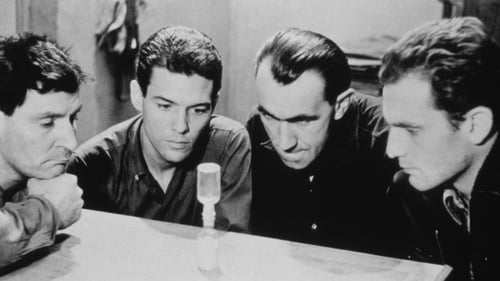





Jacques Becker directed and co-wrote the screenplay for Le Trou (The Hole), alongside Jose Giovani and Jean Aurel, adapting Giovani's novel. The film features Michel Constantin, Jean Keraudy, Philippe Leroy, Raymond Meunier, Marc Michel, and Jean-Paul Coquelin. This was Jacques Becker’s final film before his death shortly after its completion; it is a tightly controlled prison story that emphasizes stark realism and a sense of confinement. It avoids typical prison movie tropes – there are no cruel guards, no powerful inmates manipulating the system, and no violent assaults on other prisoners. The presentation feels straightforward and unadorned. Inspired by a real escape attempt at La Sante Prison in 1947, the story centers around four men in a cell who plan to dig their way out. When prison construction forces some inmates to relocate, they are uneasy about having another prisoner added to their already cramped quarters. Beyond the planned escape, a key question arises: can they trust this new arrival? Will he participate and offer assistance? These questions create a palpable tension. After Claude Gaspard (Michel) joins the cell, the narrative initially unfolds as a cautious assessment of the newcomer. There’s no intimidation or displays of aggression; instead, there's simple human interaction driven by genuine concerns. These scenes are thick with atmosphere, conveyed through hushed conversations and subtle glances. Once a level of comfort is established, the group begins to put their escape plan into motion. What follows is intensely suspenseful as Becker uses long, silent shots showing the men relentlessly pounding concrete with metal tools. The camera remains still, observing almost in real time, while the sound design amplifies the noise to an almost painful degree. We see them create ingenious devices to aid their escape and avoid detection. Throughout, a sense of trust develops between the prisoners; two of the men are tasked with venturing beyond the cell, charting a course through a confusing network of masonry, and returning to headquarters for rest and progress reports. The use of non-professional actors enhances the film’s realism, notably Jean Keraudy, who was himself an inmate involved in the actual 1947 event. The absence of music is also effective; it's unnecessary to highlight or manipulate a scene, especially during the ending, which carries significant emotional weight and avoids melodrama. It works exceptionally well. The film earns a rating of 9/10.
On September 23, 2026
#6773▼ 330
6773rd by Pulse movie online42.9PULSEPulse MeterOur daily Pulse Meter measures public activity and popularity signals across the web.How it works →