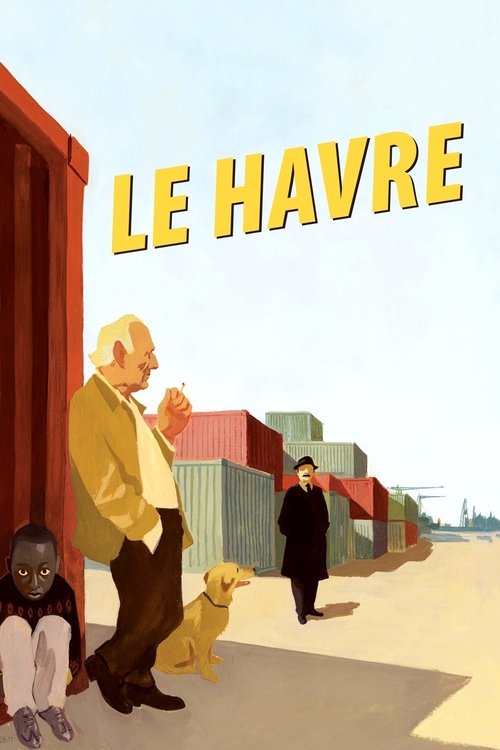





For his 2011 film LE HAVRE, Finnish director Aki Kaurismäki shifted locations from Helsinki for the initial installment in a planned trilogy centered on port cities throughout Western Europe. Consistent with his tendency to champion those facing hardship, Kaurismäki’s focus extends beyond the usual marginalized city dwellers to an even more vulnerable group: undocumented immigrants. The story follows Marcel (André Wilms), a middle-aged shoeshiner living in a modest neighborhood with his wife Arletty (Kati Outinen), who encounters Idrissa (Blondin Miguel), a young boy who traveled from Gabon to France hidden inside a shipping container. Marcel takes the boy in and helps him toward his goal of reaching England, but detective Monet (Jean-Pierre Darroussin) begins pursuing them. Despite being set in France, the film retains many characteristics typical of Kaurismäki’s Finnish productions, including minimal dialogue and understated humor. He employs a muted color palette and establishes the setting as contemporary, yet populates it with cars, radios, and rock music from the 1950s. As is customary in his films, there's a performance by an oldies rock 'n' roll band featuring musicians with pompadours and leather jackets. This element has become excessively familiar. Essentially, viewers who have experienced two of Kaurismäki’s previous works will likely find little that feels fresh regarding the film’s style or even its storyline. However, this offering proves to be more uplifting than his 2006 movie LÄHIKAUPINGIN VALOT, which was overwhelmingly pessimistic. It's evident that Kaurismäki is invested in the experiences of those attempting to flee sub-Saharan Africa, prompting contemplation on their situation; yet, his depiction of detention centers and police actions occasionally feels unsubtle.
On September 27, 2026
#17084▲ 15571
17084th by Pulse movie online26.6PULSEPulse MeterOur daily Pulse Meter measures public activity and popularity signals across the web.How it works →














