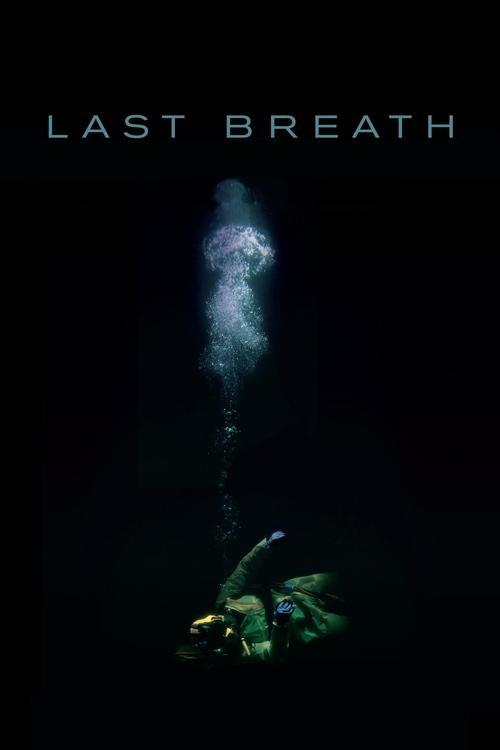




A powerfully told story makes _Last Breath_ a compelling film. The depths of the ocean remain largely unexplored; we can only guess at what exists miles beneath the surface. Alex Parkinson and Richard Da Costa’s _Last Breath_ joins the subgenre of documentary films focusing on humans versus nature. Using interviews, archival footage, camcorder recordings, and well-executed recreations, it feels like an underwater survival thriller. While the filmmakers' decision to introduce a predictable, somewhat manufactured twist detracts from the film’s seriousness—the narrative doesn’t require such additions—it remains a superbly crafted work: tense, fascinating, and informative about a subject most people know little about. September 18, 2012; while 115 miles off Scotland's coast in the North Sea, the _Bibby Topaz_ tests a drilling manifold’s safety in the Huntington Oil Field. Divers Chris Lemons, David Yuasa, and Duncan Allcock descend in the diving bell. Bad weather hits the ship, though not severe enough to cancel the dive (as dive supervisor Craig Frederick explains, “we were at the limits of diving, but it wasn't undivable”). As Lemons and Yuasa work, Allcock remains in the bell managing their umbilicals—cables that provide warmth, light, oxygen, and connection to the ship’s systems. At 300 feet deep, in total darkness, with ten times atmospheric pressure and near-freezing temperatures, a diver cannot survive long without an umbilical. When the _Topaz_'s Dynamic Positioning (DP) system unexpectedly fails, the ship begins to drift, dragging the bell and tethering the divers. Frederick orders Lemons and Yuasa back to the bell, but Lemons's umbilical snags, eventually breaking. With only five minutes of emergency oxygen, he’s cut off from contact with his crewmates, who realize it will take at least 30 minutes to return and find him—if they can regain control of the DP system. Despite some flatness in the interviews, _Last Breath_ is visually impressive; the recreations are so convincing that they blend seamlessly with helmet-cam footage and camera recordings from the ship. The film begins with Lemons’s camcorder tour of the _Topaz_, a natural introduction to his job and saturation diving, especially given he often shared videos with his fiancée, Morag Martin, instead of writing letters. Once the repair starts, the film adopts an almost science-fiction feel, highlighting unfamiliar equipment and complex computer systems, reminiscent of James Cameron’s _The Abyss_ or George P. Cosmatos's _Leviathan_. Paul Leonard-Morgan’s score is effective, although it echoes Hans Zimmer’s style. A scene where Yuasa searches for Lemons showcases this; Parkinson and Da Costa use narration over silent reflections from the interviewees while Morgan’s music swells in the background. The film's structure proves both its strength and a potential flaw. Without giving away details, the filmmakers introduce a twist late on, then rewind to show another interviewee's perspective. This is an unusual technique for a documentary; it’s interesting but unnecessary. It would have been better to rely on the story’s inherent power. While not as damaging as a similar element in _Three Identical Strangers_, this choice risks diminishing the psychological impact of the incident. The twist is also predictable, lessening its effect. Despite this misstep, _Last Breath_ is an excellent documentary. Though it doesn't reach the heights of films like _One Day in September_ or _Touching the Void_, there’s much to appreciate. Combining survival elements with submarine movie aesthetics, the film effectively portrays a normal workday for these men: claustrophobia, isolation, and a harsh environment. It depicts strong bonds between colleagues who respect each other and the ocean they work in. At its core, it's both a story of working-class solidarity and a gripping thriller, offering viewers plenty to connect with—as much through its quiet human moments as through its dramatic struggle against overwhelming odds.
On September 27, 2026
#20180▲ 19835
20180th by Pulse movie online23.8PULSEPulse MeterOur daily Pulse Meter measures public activity and popularity signals across the web.How it works →