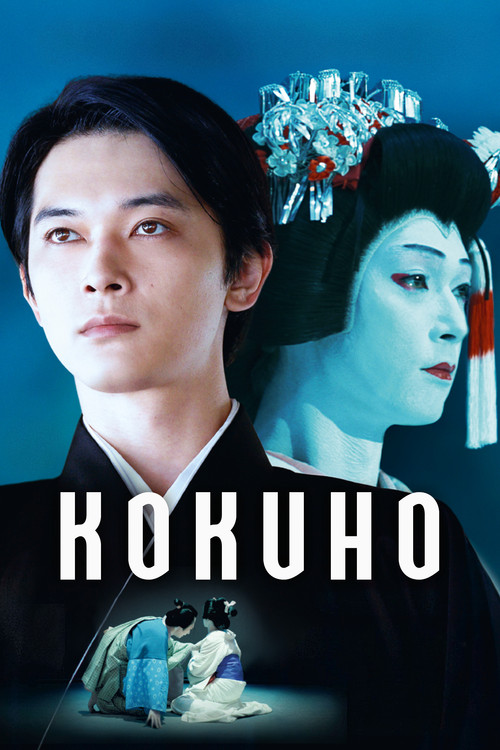




The initial scene introduces "Kikuo" (Soyo Murokawa) and immediately suggests his Yakuza father isn’t particularly impressed with his son’s profession: performing kabuki at a luncheon. However, that moment is quickly disrupted by a rival gang's intrusion, leaving the young man orphaned at fifteen under the care of "Hanjiro" (Ken Watanabe), who is reportedly Japan’s finest actor. Following an unsuccessful attempt at revenge for his father, “Kikuo” (now Ryô Yoshizawa) and his newly acquired brother "Shensuke" (Ryûsei Yokohama) overcome their initial reservations to become both friends and students of this demanding instructor as he imparts the complexities of his craft. Historically, this unique theatrical tradition garnered attention from the 18th-century shogunate, who banned women from participating due to concerns about its influence – a parallel to Shakespearean England centuries earlier, where only men were permitted on stage. Fortunately for these two young men, they possess a certain femininity: a (painfully earned) flexibility of body and voice, including the ability to sing in falsetto, which leads to their success as a double act. A tragedy then strikes this makeshift family, prompting the injured "Hanjiro" to choose a successor, a crucial decision since this performance style is traditionally passed down through generations; those not designated heirs are excluded from the fraternity. This creates an immediate dilemma: one young man has the lineage but lacks skill, while the other excels but isn't the heir. The choice made threatens to irrevocably alter the bond between "Kikuo" and "Shensuke." Can time mend their relationship? Primarily, this is a beautifully realized film; the lighting and combination of traditional Japanese music with more classically European scores are particularly effective in conveying the almost visceral dedication and precision that define their art. Their plays frequently depict tragedies—one instance shows a loving father demonstrating his devotion by pushing his son off a cliff—and the production design achieves perfection in both costumes and makeup. Even for audiences unfamiliar with this style of music, their stage performances are captivating and often deeply sad. Beyond the stage, there’s considerable ambition on display, frequently resulting in women and children becoming casualties as the men's lives experience highs and lows across the 1970s, 80s, and 90s. I found Yoshizawa's portrayal of "Kikuo" to be both believable and engaging; his depiction of a young man deprived of family, existing on the fringes of another, and increasingly isolated as he strives for excellence is compellingly presented. For much of the film’s latter portion, his relationship with Yokohama, who is equally talented, becomes touching, almost as if their onstage connection was bleeding into reality. This is a beautiful cinematic exploration of an almost three-hundred-year-old theatrical form and feels effortless despite its nearly three-hour length. It contains intensity, opportunity, despair, and even some decay (in the 1980s!). If you're seeking something with operatic qualities, this is certainly worth watching. Seeing it in a cinema would be ideal. It’s a love story—but not one you might anticipate.
On September 26, 2026
#1716▲ 1
1716th by Pulse movie online46.2PULSEPulse MeterOur daily Pulse Meter measures public activity and popularity signals across the web.How it works →