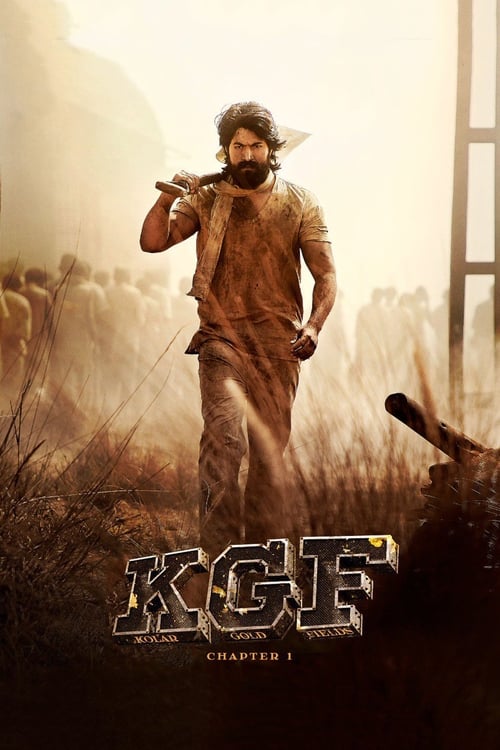





The initial section lays the groundwork for a large-scale conflict that will unfold in Chapter 2. What truly defines passion? It's the repeated dedication and effort poured into something until it’s absolutely perfect, something cherished and protected without any distractions. Director Prashant Neel once mentioned in an interview that he rewatched KGF over 150 times during editing, aiming to create a near-flawless work of art similar to his own vision. During filming, cinematographer Bhuvan Gowda routinely carried around 40 kilograms of camera equipment while shooting scenes in harsh, windy conditions. Despite massive sets collapsing due to strong winds and rain, Art Director Shivakumar would rebuild them exactly as they were before. Actor Yash performed numerous takes without showing any signs of tiredness or boredom amidst the challenging environment. KGF is structured as a two-part story. The first chapter establishes a historical timeline, explaining the significance of gold ownership and the battles fought over it. It focuses on smaller-scale, disorganized crime and underworld activities. Chapter 1 explores the greed and power struggles among various characters vying for control of the KGF goldmine. To ascend to a larger world of international criminal organizations, one must first clear a path through these initial conflicts; the groundwork has to be laid before reaching the top. The chapter concludes at the precipice of Chapter 2, which promises a three-way battle involving an international mafia seeking gold, interference from the Indian government, and Rocky—who emerges as a heroic figure from KGF slavery. The story is told through the firsthand account of an author (played by Anantnag) to a News Editor (played by Malvika Avinash), after his book has been banned by the Central Government. He recounts Rocky’s journey from birth to becoming a feared crime lord, tracing his path from Mumbai docks to Bangalore and ultimately to KGF. The portrayal of maternal themes is well-developed and strategically placed throughout the film. While the storyline can be somewhat predictable and shares similarities with the Ugramm template, like Ugramm, numerous characters are introduced, which presents a challenge for viewers trying to keep track. Yash’s introduction through an extended action sequence effectively captures the audience's attention. The first half of KGF has some shortcomings; the scenes between Yash and Srinidhi could have been better. More details about the supporting cast might be revealed in Chapter 2. Fortunately, the second half lives up to expectations, culminating in a dramatic climax that leaves several plot threads unresolved for resolution in Chapter 2. Throughout its runtime, KGF is packed with intense action sequences. The dialogue is sharp and impactful, although the music itself is average, somewhat redeemed by an exceptional background score (which draws inspiration from Hans Zimmer’s soundtrack for “The Oil”/Dunkirk). From a technical standpoint, Director Prashant Neel deserves recognition for bringing his vision to life. The editing is precise; multiple scenes are presented in parallel and occasionally blurred to create the impression that characters are unaware of impending events. Ravi Basrur's music is unremarkable, but the background score elevates every scene. Bhuvan Gowda’s cinematography is outstanding and world-class (he should receive all awards if nominations occur at a nationwide level in 2019). Art Director Shivakumar deserves praise for constructing such massive mine sets amidst challenging conditions. KGF utilized approximately 90% practical sets and only 10% visual effects during filming. Ultimately, KGF – Chapter 1 prepares the stage for the large-scale showdown planned for chapter 2.
On September 30, 2026
#11452▲ 482
11452nd by Pulse movie online4.1PULSEPulse MeterOur daily Pulse Meter measures public activity and popularity signals across the web.How it works →














