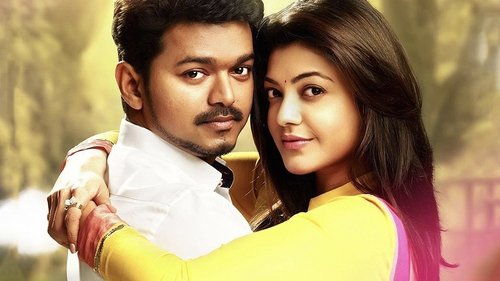




It seems Vijay has figured out how to make films that appeal not only to his fans but also to a wider audience, much like he did with earlier successes such as Ghilli, Pokkiri and Thuppakki, and now again with Jilla. This time, he shares the spotlight with Mohanlal, who portrays his father figure in the story. The narrative centers on Sivan (Mohanlal), a powerful man in Madurai, raising Sakthi (Vijay) after Sakthi’s biological father died protecting him. They are an influential force until circumstances compel Sivan to ask Sakthi to join the police force. Following a tragic accident resulting in several deaths, Sakthi wants his adopted father to change his ways. However, Sivan is resistant and soon they find themselves on opposing sides. As a commercial film, Jilla delivers assured filmmaking. The director recognizes that the conflict between Sivan and Sakthi drives the story and establishes their initial disagreement effectively. Sakthi realizes his mistake after a devastating explosion caused by Sivan's actions. These scenes following the blast are intense for this type of movie but they’re crucial in showing why someone as devoted as Sakthi would turn against the person he considers his father. The confrontation scene is well-executed, with impactful dialogue. Vijay and Mohanlal both perform strongly; Vijay delivers Sakthi’s lines casually (Unakkaga enaku pidikadha khakhi potu police aanen illa, enakkaga nee ippo nallavana maaru), while Mohanlal conveys Sivan's lines with seriousness, clearly illustrating each character’s position—the son simply wants his father to change, but the latter refuses and is even willing to disown him. The intermission leaves you eager to see what happens next. The director also keeps Sivan’s character morally ambiguous; he shows no regret for the explosion and even works with a banned pharmaceutical company, displaying an ego that demands Sakthi be brought into line at any cost. This makes it feel disappointing when another antagonist is introduced with the goal of taking down the father-son duo. Fortunately, this feeling doesn't last long as this new character provides a significant challenge for Sakthi and keeps the story engaging. He even achieves a minor victory by killing someone close to both Sakthi and Sivan. The lighter moments are also handled well. The director understands the irony of a man who dislikes law enforcement falling in love with a police officer, treating the romance playfully. Similarly, he approaches the scene where Sivan encourages Sakthi to become a cop with a lighthearted touch. A father figure asking his son to do something he hates is inherently dramatic material, but the director avoids that by using humor; and to prevent it from feeling too frivolous, Sakthi tells his mother he’ll do anything to avoid seeing his dad upset again. He also manages to make the unlikely scenario of a gangster's associate becoming a police officer believable. The biggest problem with Jilla is its length. The director, seemingly trying to create a complete entertainment package, keeps adding scenes without considering the running time. This includes an unnecessary subplot involving Sakthi’s sister and songs that feel forced and extend the film’s duration. Also, his habit of flashing back to childhood moments whenever he wants to evoke emotion becomes excessive—the movie itself begins with Sakthi as a child; when Sakthi is hurt, he remembers Sivan rushing to him after an earlier injury; when his brother talks about growing up together, we see a montage of them holding hands.
On September 23, 2026
#69457▲ 10009
69457th by Pulse movie online7.2PULSEPulse MeterOur daily Pulse Meter measures public activity and popularity signals across the web.How it works →